Showing posts with label paramedic. Show all posts

Monday, May 12, 2014

Firefighter Workouts on Shift-- To workout or not?

Do you workout on shift?  Should you workout on shift and what is the best workout to perform?

This is a major concern for the fire rescue athlete.  On one hand we know we should be working out to stay and get fit for duty. Yet , if we burn out in the gym we won't be able to perform when it really matters. I recently posted an interval workout (Click Here to Read it) that received a lot of hits and emails. Most of the emails dealt with this question more importantly asked "what is the best form of exercise to perform on duty?"

Here is my take on the question.  We all know that when the bell goes off the fire rescue athlete MUST be ready to perform.  With that in mind, it doesn't make a lot of sense to perform a grueling workout on duty.   I personally prefer some lighter cardio interval training, some core and/or rehab exercisesfoam rolling, and stretching.

One of the benefits of being a firefighter is that (for the most part) we know our schedules well in advance and should plan our more intense workouts for off-duty days and save the on-duty days to recover from them.   This requires some planning but is the most effective way to be "fit for duty."

Here is a great example of a "planned"  week of workouts for the fire rescue athlete.  This is similar to the weekly schedule found in the FRF Ultimate Fire Rescue Athlete Program.

Sunday
Fullbody Strength or Metabolic Workout- This type of workout challenges all muscle groups including the core.  Metabolic workout has short intervals and more power movements, strength workouts utilize longer rest intervals and heavier resistances.

Monday
Cardiovascular Interval Training-  Higher intensity cardio workout like sprints, hills or FRF Interval

Tuesday
Firehouse Shift- Foam rolling and light stretching between calls

Wednesday
Fullbody Strength or Metabolic Workout- This type of workout challenges all muscle groups including the core. Metabolic workout has short intervals and more power movements, strength workouts utilize longer rest intervals and heavier resistances.

Thursday
Firehouse Shift- Recovery day, maybe some foam rolling and/or stretching

Friday
Day OFF- This is a great day to take a day off, especially if you had a tough shift the night before

Saturday
Firehouse Shift- Cardio Interval and foam rolling, possibly some fire-ground circuits.

Sunday
Fullbody Strength or Metabolic Workout- This type of workout challenges all muscle groups including the core. Metabolic workout has short intervals and more power movements, strength workouts utilize longer rest intervals and heavier resistances.

Obviously everyone's schedule is a little different, I included the following Sunday to set up the next week where you may not have as many shifts.  The main idea is to plan your workouts to help you continue to work towards your fitness goal and to "be ready" on-shift.

If you are currently spinning your wheels about your workout plan or are looking for a new plan?  Take a look at the FRF Ultimate Fire Athlete Workout...I think it is the most efficient and effective workout for fire rescue athletes.

Please leave some comments and as always email me with questions. 
Stay Safe and Healthy,
A. Zamzow

Tuesday, January 31, 2012

10-minute Interval Overhauls (Firefighter Skills Training)

Now, as you probably know from reading my previous blog posts that I think that interval training is very applicable to what we do on the fire ground.  A unique component that I've added to my workouts is a 10-minute Interval Overhaul.  These interval Overhauls are a combination of exercises that challenges the total body, allows me to work on firefighter skills and simulates work on the fire ground.    And they really "jack-up" my metabolism too!   I challenge you to try one at the end of your workout.
Here is an example of an Overhaul I did after my strength workout the other day:
Sledge o’ matic- For this Overhaul finisher you need a sledge (the heavier, the harder), an old tire, some heavy dumbbells (or saws from the truck) and an interval timer set to 30 seconds of work and 30 seconds of rest for 10 intervals (10 minutes total time). 
Take the sledge and slam the tire for 30 seconds, then rest for 30 seconds.  For the next interval, grab two saws or heavy dumbbells; walk (with a purpose) for 30 seconds, after the 30 seconds is up, place the weights down and actively rest for 30 seconds.  Repeat each interval 4 more times.  Use different swing positions with the sledge and slam interval (right side, left side, overhead).
I feel that these Overhauls realistically simulate the exhaustions felt on the fire ground and rescue scene.   I know that there are tons of ways to perform these Overhauls and challenge you to come up with your own.   If and when you do, I would like to know about it so please email me your ideas.
To really see how to effectively incorporate these Overhauls with a solid strength and core workout download my FREE FireRescue 28-day Quickstart Program.

Sunday, January 22, 2012

Firefighter Fitness- Should You Exercise While Your Sick?


It’s that time of the year.  The flu bug is in full affect and is probably making its way through a firehouse near you.  We get exposed to lots of different viruses through EMS responses, hospital transports and via the close confines of the firehouse.  I get a lot of people asking me if they should try to exercise while they are battling the flu or the cold.
 According to the American College of Sports Medicine, the general rule of thumb is that if your symptoms are from the neck up; then “yes” give your workout a go.  If your symptoms are below; then “no.” 

Here’s what I mean:

If you have a common cold, runny nose, sore throat, and/or NO fever, then light to moderate exercise is generally “ok.”

If your illness involves body aches, fever, diarrhea, weakness, swollen lymph nodes, and/ or fatigue then it's best to “REST.”

Recommendations to help you get through a workout when you have a cold:

·         Hydrate!  Shoot for half your body weight in ounces of water per day
·         Stretch: increases circulation
·         Light cardio: Cardiovascular exercise causes vasodilatation or widening of the blood vessels to help clear up sinuses and cold symptoms.
·         Slow down: Decrease intensity & duration
·         Germs: Bring your own towel and water bottle and keep your germs to yourself!

Here are some tips to prevent getting the cold or flu:

·         WASH YOUR HANDS!  Keeping hands clean through improved hand hygiene is one of the most important steps we can take to avoid getting sick and spreading germs to others.
·         Rest! Sleep as much as possible to allow the body to recover!
·         Increase antioxidants: load up on fruits and vegetables; focus on Vitamins A, C, E and Selenium
·         Cut sugar & caffeine: Both have been shown to weaken the immune system
·         Eliminate alcohol: I’m not saying to quit, I’m just saying alcohol weakens the immune system. 

The bottom line is that you must “listen” to your body.   Personally, if I'm not feeling too bad, then I like to get a light cardio workout in to increase blood flow and circulation. If I choose to do strength work, I perform a low intensity workout to prevent too much muscle/body breakdown.
Hope these help.

Stay Safe!

Thursday, January 12, 2012

Snacking around the Firehouse

Everyone (especially around the firehouse) loves a good snack. But what actually is a "good" snack.
If you ask some, they will define a good snack as something that tastes great but doesn't fill you up like a meal.  If your stomach starts rumbling and lunch is still two hours away, you're going to need a snack to make it through the day. What firefighters/emts/ must remember is that the foods you eat at snack time can make a big difference in your energy level, decision making, performance, and overall health. Choose the wrong snack, and you'll feel dragged down, tired and cloudy.  Choose wisely, and you'll get the boost and performance you need.  
Choose your snacks wisely, you never
know when you will need the exra energy.
 Before your next snack break, think twice about what you are about to eat and remember the following information when you're craving a snack!

Snacking for Energy
If you find yourself fighting sleepiness in the afternoon, what your body needs is a boost of energy. Snacks eaten midday should contain good fats and protein to give and sustain your energy level. Here are a few good options when you need an energy-boosting snack.

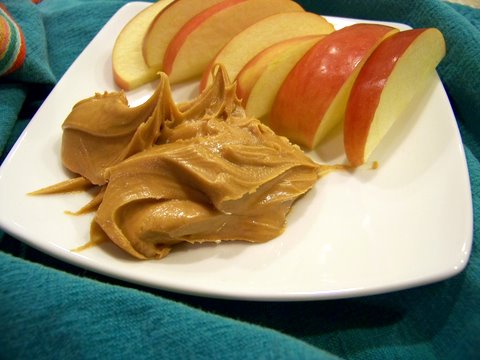
  • A small apple or sliced banana with a tablespoon of peanut butter. The natural sugars in fruit take longer to metabolize than sugars found in candy, and the peanut butter provides the protein needed for long-lasting energy.
  • A quarter cup of nuts and dried fruit. This slow-burning mixture provides protein, good fats (that's right - fats aren't always bad), and plenty of fiber, all wrapped up in a delicious package. Just be careful. Eating too many of these carbohydrates can cause low blood sugar and make you feel even sleepier.
  • One tablespoon of hummus spread on four whole-grain crackers. Made from garbanzo beans, hummus is a great energy booster and is also full of fiber. And the whole-grain crackers are made with complex carbohydrates, which help fill you up without dragging you down.
  • Sliced avocado with deli sliced turkey wrapped around them
Snacking for Weight Management
Many people eliminate snacks when attempting to lose weight. Unfortunately, this is counterproductive, as snacks keep you satisfied between meals. If dinnertime arrives and you're exceptionally hungry, it's easy to overeat. Eating several small snacks throughout the day will help keep your hunger in check. However, you should avoid eating snacks when you're bored, stressed, zoning out in front of the TV, or not paying attention to what you're eating while studying for your next exam.
The key is to choose snacks that fit with your daily calorie and nutrient needs. If your goal is to lose weight, choose low-calorie, nutrient-filled snacks. If you need to gain weight or if you are physically fit and need to replenish energy from a strenuous workout, go for higher calorie, nutritious snacks.
Low-carb snack ideas include vegetables, reduced-fat yogurt and cottage cheese, half of an avocado, and a few deli slices.

I know some of these options may not be popular with all the members of the crew but we all have to remember that what we eat determines how we perform on the fireground and on scene.  Remember, eat like your life depends on it...because it does.

Tuesday, November 29, 2011

Firefighters...the ultimate athlete?

As a firefighter (paramedic and emt included), you train to mitigate the risks that you are sure to face on the job.  Your fitness cannot be a liability, it must be on par with the skills you have spent so much time learning.  Like an athlete, you must be game ready at all times. What does it mean to be game ready as a firefighter?  To be ready, you must be training like a firefighter. I see too many firefighters training like bodybuilders or like the athletes that they may have been in high school or college. You can't train like a triathlete to play football nor train like a football player to play hockey.  Training like a firefighter requires that you train in a way to specifically address the physical requirements of the job.  That means working to acquire extreme levels of cardio vascular, muscular and metabolic endurance. You need the ability to go full throttle for 30, 40 or 60 minutes. You need to be able to recover quickly so that you can get back in the game. Some water, a new bottle of air and you are good to go.  You also MUST have as strong core and good flexibility.  With all this in mind let me ask you:  "Are you training like a firefighter?"
This website is dedicated to helping you not only train like a firefighter,  get you Fit for Duty, stay Fit for Duty, and become a fire athlete.

Friday, November 25, 2011

Get fit for duty, stay fit for duty.

Train like your life depends on it...because it does.  I'm sure you've heard that slogan before either at a seminar or around the firehouse.  What exactly does it mean?  In the context of this website we (I) mean that every fireifghter, emt, and paramedic should look at their level of fitness as another tool like an axe, ladder or IV for that matter.  Your level of fitness can have a huge impact on the outcome of an accident or scene (fireground or other). 
The fire rescue business is not based on individual efforts, its the controlled and coordinated effort of a crew.  Each person of the crew has a specific task that must be completed.  In most of these cases failure of a task could lead to injury or possibly death.  Your level of fitness determines of efficiently and effectively that task is carried out.


Now I ask you...are you fit for duty?


Coming Janaury 2012...The Ultimate Workout Program for Firefighters, EMTs and Paramedics

Please check back often or join the email list.