Showing posts with label health. Show all posts

Monday, October 1, 2012

Firefighter Nutrition- The Glycemic Index

Today's post is important not only for the Fire Rescue Athlete but for anyone trying to stay strong and lean.  I often get nutrition related questions from people about the "best" foods to eat for staying lean.  These questions prompted some research and this post.

In case you didn't know, most diet programs revolve around the Glycemic index.

This scale has been developed to help you understand how the various carbohydrate rich foods that you eat act upon the body and which will be best to eat for a lean body composition and muscle mass gains.

If you were unaware of this fact, then you need to learn about it immediately. And for those of you who already knew that, you still might learn something from this post.

Let’s take a closer look at what the Glycemic Index is all about so you can see why this is one thing that you’ll want to be paying close attention to.

The Glycemic Index--How It Works And Why You Should Pay Attention To It

First let’s address how the glycemic index works. The glycemic index is rating scale that is based off 100% pure glucose, which is given the rating of 100. All other foods are then compared to how glucose affects the blood sugar levels after consumption and rated accordingly.

Those that produce a slower digestion response in the body thus producing a lower degree of blood sugar spike are given a value of less than 100, while those that produce a faster blood glucose spike are given a value greater than 100.

In addition to knowing the glucose index rating for the food, it’s also helpful to take into account the glycemic load of a particular food as this one also takes into account how much food you’re eating as well.

It’s important to pay attention to these two factors because the speed in which the carbohydrates become available to the body cells after release into the blood stream is going to influence factors such as muscle building as well as fat loss.

Eating the wrong foods at the wrong times and you may not be seeing the results you were hoping for.

The Glycemic Index And Its Effects On Building Muscle and Weight Loss

So what do you need to know with regards to how the glycemic index impacts your muscle building diet plan?

What you need to keep in mind is that immediately after the workout, you’re going to want to boost blood glucose levels as high as possible, as this is what will drive the glucose into the muscle cells.

As a result, you’ll experience faster recovery and faster rates of lean muscle growth.

Later on in the day however, when you are out of the post-workout period, it will be important that you are focusing on keeping your blood sugar levels as controlled as possible as this is what will decrease your chance of storing excess body fat and weight. The end result is that you will be leaner and less likely to gain fat.

Using The Glycemic Index To Plan Your Meals

So now that you know what the glycemic index is, how can you use this to time your meals? The main thing to remember is that you should be focusing on having your simple carbohydrates (sugars) that are high in the glycemic index scale immediately after a workout. This is when the blood glucose spike will be helpful and will yield better overall results for you.

At other times of the day the focus should be on only those foods that are low on the glycemic index scale. These will be the ones that are going to have minimal impact on blood sugar levels and help to reduce the blood sugar response you get.

Here is a sample reference chart for you to use to guide your choices:

Low GI (55 or less) – most fruits and vegetables, legumes, nuts, fructose

Medium GI (55-69) – whole wheat products, basmati rice, sweet potato, sucrose, baked potatoes

High GI (70 and above) – white bread, most white rice, corn flakes, glucose, maltose, maltodextrins

To find the GI number for any food check out www.glycemicindex.com

For guidelines on eating lean in the firehouse (or any house) join the Fire Rescue Fitness Nation and get the SOPs to Eating Lean in the Firehouse and the FRF 28-day Quickstart Workout Program.

Stay Safe and Healthy,
A. Zamzow


Tuesday, February 7, 2012

Firefighter Fitness and Metabolism

What is Metabolism?

You may often here around the firehouse someone say "I have a slow metabolism."  Usually these individuals are a little on the larger size and often like to joke about their size.  Unfortunately these people are at a very high risk to keep the trend of heart related Firefighter fatalities in tact.  I'm not saying that larger individuals cannot perform the job, in most cases they are great firefighters.  What I am saying is that there is more to the picture than a "slow metabolism."

There are a large number of individuals that believe the reason they are overweight has nothing to do with their appetite, and/or level of activity. They assume it is an inherent problem with their “metabolism”. So today I wanted to clear the air around the firehouse (and other houses) about what metabolism really is.

Taber’s Medical Dictionary defines Metabolism as: The sum of all the physical and chemical changes that take place within an organism; all energy and material transformations that occur within living cells.

My definition: The bodies use of nutrients and oxygen to produce energy; measured in calories.

What is RMR or BMR?

BMR or RMR is the number of calories the body needs to maintain basic bodily function. This represents 55-60% of a person’s metabolism. The other 30-40% is the energy cost of being active and the remaining 5-10% of Metabolism is Thermo-genesis, which is the body’s response to changes in the environmental temperature.

Metabolism varies between individuals due to:

• Body Composition (Fat vs. Muscle)

• Body Weight

• Age

• Gender

Metabolism can and will change as a result of weight loss, caloric restriction, change in body composition (body fat) and exercise. When one loses weight their metabolism will typically decrease. Remember one of the variables in metabolism is weight. The engine (your body’s vital organs) must work harder for a heavier individual.

Aerobic exercise burns calories but does not have a long-standing effect on metabolism; it is temporary. Lean body mass (muscle) is metabolically more active even at rest. Please note this is not saying that aerobic activity is unnecessary in the process of weight management. In fact, research now shows that the combination of resistance training (building muscle) and aerobic exercise (burning calories) is the most effective means for losing weight.

This is as simple as it gets:

FOOD INPUT (calories) is either  used as energy or stored as fat.

The more active you are the more your food will be used as energy, not stored as fat. Point being, get active and stay active. If you aren't currently following a fitness program I recommend trying the FireRescue Fitness 28-day Quickstart Progrm, you can get it here for FREE.


“ And what is man without energy? Nothing- nothing at all.” – Mark Twain

Tuesday, January 31, 2012

10-minute Interval Overhauls (Firefighter Skills Training)

Now, as you probably know from reading my previous blog posts that I think that interval training is very applicable to what we do on the fire ground.  A unique component that I've added to my workouts is a 10-minute Interval Overhaul.  These interval Overhauls are a combination of exercises that challenges the total body, allows me to work on firefighter skills and simulates work on the fire ground.    And they really "jack-up" my metabolism too!   I challenge you to try one at the end of your workout.
Here is an example of an Overhaul I did after my strength workout the other day:
Sledge o’ matic- For this Overhaul finisher you need a sledge (the heavier, the harder), an old tire, some heavy dumbbells (or saws from the truck) and an interval timer set to 30 seconds of work and 30 seconds of rest for 10 intervals (10 minutes total time). 
Take the sledge and slam the tire for 30 seconds, then rest for 30 seconds.  For the next interval, grab two saws or heavy dumbbells; walk (with a purpose) for 30 seconds, after the 30 seconds is up, place the weights down and actively rest for 30 seconds.  Repeat each interval 4 more times.  Use different swing positions with the sledge and slam interval (right side, left side, overhead).
I feel that these Overhauls realistically simulate the exhaustions felt on the fire ground and rescue scene.   I know that there are tons of ways to perform these Overhauls and challenge you to come up with your own.   If and when you do, I would like to know about it so please email me your ideas.
To really see how to effectively incorporate these Overhauls with a solid strength and core workout download my FREE FireRescue 28-day Quickstart Program.

Wednesday, January 18, 2012

A new weapon for Firefighters war on Heart Disease

Heart disease kills more on-duty firefighters than anything else -- and it is definitely linked to emergency duties, a Harvard study shows. Most people think firefighters' biggest death threats are fires and collapsing buildings. But over the last 30 years it's been shown that 45% of firefighters' on-duty deaths come from heart disease.    Over these last 30 years the actual percentage of fire calls has decreased yet the rate of heart attacks has remained the same.  So why haven't we (as Firefigthers, Paramedics and EMT's) done anything to prevent it?  Part of the issue is that firefighters exertion on the fire scene causes an excessive amount of stress on the heart, thus causing heart attacks.  Many of the firefighters that died from a heart related issue had prior "heart health warning signs" like high cholesterol and high blood pressure.  These heart health risks coupled with the extreme exertion are a bad and risky combination.

I personally think that we need to take a proactive approach to the issue.  The FireRescue community needs to commit to a complete exercise program that emphasizes not only heart health but overall strength and wellness.  


Recently I've discovered another way Firefighters, Paramedics and EMT's can combat their high risk of heart attack (and cancer).  CLICK HERE to Read more......and as always, STAY SAFE.

Thursday, January 12, 2012

Snacking around the Firehouse

Everyone (especially around the firehouse) loves a good snack. But what actually is a "good" snack.
If you ask some, they will define a good snack as something that tastes great but doesn't fill you up like a meal.  If your stomach starts rumbling and lunch is still two hours away, you're going to need a snack to make it through the day. What firefighters/emts/ must remember is that the foods you eat at snack time can make a big difference in your energy level, decision making, performance, and overall health. Choose the wrong snack, and you'll feel dragged down, tired and cloudy.  Choose wisely, and you'll get the boost and performance you need.  
Choose your snacks wisely, you never
know when you will need the exra energy.
 Before your next snack break, think twice about what you are about to eat and remember the following information when you're craving a snack!

Snacking for Energy
If you find yourself fighting sleepiness in the afternoon, what your body needs is a boost of energy. Snacks eaten midday should contain good fats and protein to give and sustain your energy level. Here are a few good options when you need an energy-boosting snack.

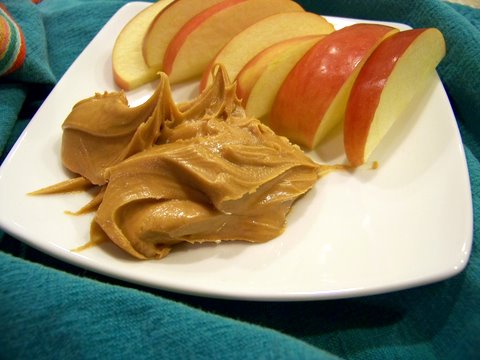
  • A small apple or sliced banana with a tablespoon of peanut butter. The natural sugars in fruit take longer to metabolize than sugars found in candy, and the peanut butter provides the protein needed for long-lasting energy.
  • A quarter cup of nuts and dried fruit. This slow-burning mixture provides protein, good fats (that's right - fats aren't always bad), and plenty of fiber, all wrapped up in a delicious package. Just be careful. Eating too many of these carbohydrates can cause low blood sugar and make you feel even sleepier.
  • One tablespoon of hummus spread on four whole-grain crackers. Made from garbanzo beans, hummus is a great energy booster and is also full of fiber. And the whole-grain crackers are made with complex carbohydrates, which help fill you up without dragging you down.
  • Sliced avocado with deli sliced turkey wrapped around them
Snacking for Weight Management
Many people eliminate snacks when attempting to lose weight. Unfortunately, this is counterproductive, as snacks keep you satisfied between meals. If dinnertime arrives and you're exceptionally hungry, it's easy to overeat. Eating several small snacks throughout the day will help keep your hunger in check. However, you should avoid eating snacks when you're bored, stressed, zoning out in front of the TV, or not paying attention to what you're eating while studying for your next exam.
The key is to choose snacks that fit with your daily calorie and nutrient needs. If your goal is to lose weight, choose low-calorie, nutrient-filled snacks. If you need to gain weight or if you are physically fit and need to replenish energy from a strenuous workout, go for higher calorie, nutritious snacks.
Low-carb snack ideas include vegetables, reduced-fat yogurt and cottage cheese, half of an avocado, and a few deli slices.

I know some of these options may not be popular with all the members of the crew but we all have to remember that what we eat determines how we perform on the fireground and on scene.  Remember, eat like your life depends on it...because it does.

Saturday, December 17, 2011

The Importance of a Strong Core for Firefighters, EMTs and Paramedics

Each year, tens of thousands of Firefighters, EMTs and Paramedics are injured while fighting fires, responding to incidents, transporting patients and training for the job. While a majority of the injuries are minor, a significant number are debilitating and career-ending.  Of these debilitating injuries almost 50% have to do with low back pain and a recent survey by the International Association of Fire Fighters determined that about half of all injury retirements were due to back injuries.  The high rate of low back injuries can be attributed to the high-risk activities that we are expected to perform, such as operating charged hoselines, climbing ladders, breaking windows, ventilating structures, performing overhaul and lifting objects greater than 40 lbs.  As you know, these tasks are often accomplished while the body’s posture is ergonomically unsound or on unstable ground.

I know I’m not telling you something you don’t already know, but I do want to emphasize the fact that over 50% of all injury retirements are due to low back pain.  Like you, I love my job and would hate to lose it because of injury.  Unlike other professions, we as Firefighters, EMTs and Paramedics don’t always have the luxury or the time to take precautions beforehand to minimize workplace injuries.  Let’s face it; we don't have the luxury of warming up at three in the morning when we go out on a scene. 
With that in mind you MUST keep your back and your core strong.  Take a look at the video below; here are 4 exercises that you should incorporate into your current fitness program.  Don’t have a fitness program, try them anyways…your career may depend on it.  (And, stay tuned for the Ultimate Workout Program for Firefighters, EMTs and Paramedics…coming soon)


Try to incorporate these 4 exercises (1 or 2 circuits 10 to 20 reps)
1.  4-count crunch
2.  Plank
3.  Bicycle crunch
4.  Swimmers (opposite arm/leg raise)

Tuesday, November 29, 2011

Firefighters...the ultimate athlete?

As a firefighter (paramedic and emt included), you train to mitigate the risks that you are sure to face on the job.  Your fitness cannot be a liability, it must be on par with the skills you have spent so much time learning.  Like an athlete, you must be game ready at all times. What does it mean to be game ready as a firefighter?  To be ready, you must be training like a firefighter. I see too many firefighters training like bodybuilders or like the athletes that they may have been in high school or college. You can't train like a triathlete to play football nor train like a football player to play hockey.  Training like a firefighter requires that you train in a way to specifically address the physical requirements of the job.  That means working to acquire extreme levels of cardio vascular, muscular and metabolic endurance. You need the ability to go full throttle for 30, 40 or 60 minutes. You need to be able to recover quickly so that you can get back in the game. Some water, a new bottle of air and you are good to go.  You also MUST have as strong core and good flexibility.  With all this in mind let me ask you:  "Are you training like a firefighter?"
This website is dedicated to helping you not only train like a firefighter,  get you Fit for Duty, stay Fit for Duty, and become a fire athlete.