Showing posts with label best exercise. Show all posts

Tuesday, September 30, 2014

One of the 10 Best Exercises for Firefighters


I recently completed a FREE report of the "10 Best Exercises for Firefighters." You can get a copy of all 10 exercises for FREE by Clicking HERE Now.  Here is one that made the list.
The Side Plank- a great core exercise...

1. Plank(s) and variations of it.  --
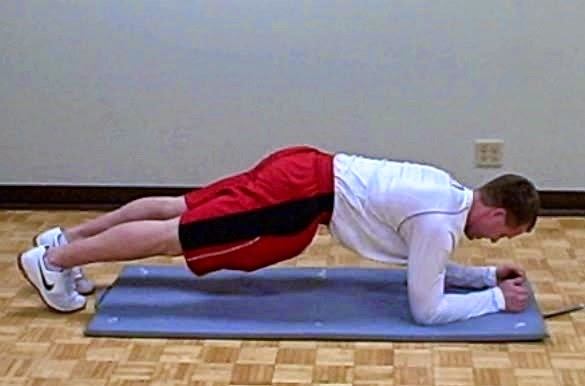
It's no surprise that the one of the exercises on this list is a core exercise. Back injuries are the number one reason firefighters and medics go on early disability so it's imperative that as a fire rescue athlete you focus on strengthening the core. The plank exercise requires no equipment and is an incredible exercise for improving core strength, endurance, and power. As mention previously, core strength is integral for the fire rescue athlete, as all movement occurs around the core. The plank will increase core efficiency allowing the body to have greater control and stability. All fire rescue athletes should include some version of the plank in their workout program. Use multiple positions: plank, side plank, and bridge.


The Prone Plank (one of the best core exercises)

Try these other variations...
Stay Safe and Healthy,
Aaron Zamzow

Monday, August 11, 2014

Firefighter Workout Tip- The Importance of a Proper Warm-up...

Flexibility is often the most overlooked aspect of a an effective firefighter workout. Participating in an appropriate warm-up and cool down and stretching program has shown to help firefighter performance by:
  • Increasing physical efficiency and performance
    Can you do this?
  • Increasing neuromuscular coordination
  • Decreasing risk of severity of injury
  • Decreasing risk of lower back pain
  • Decreasing delayed onset muscle soreness
  • Decreasing stress and tension

What are the best ways, types and times to stretch (very important)?

This is the first of a couple of posts about flexibility.  Today I want to talk about the Active Warm-up.  If you are like most of us, you were taught how to stretch in your high school weight lifting class and you've likely continued with pretty much the same routine ever since.  Science, however, has moved on. Researchers now believe that some of the old school workout warm-up regimens are not only a waste of time but actually pose potential risk. This "old school" warm-up routine of starting your workout with a brisk walk or jog, then perform some simple body part stretches and hold them for 20 to 30 seconds (static stretching) can actually harm your body and weaken muscles. In a recent study conducted and the University of Nevada, Las Vegas athletes generated less force from their leg muscles after static stretching (holding stretches for over 10 seconds) than they did after not stretching at all. Other studies have found that this stretching decreases muscle strength by as much as 30 %.

A warm-up should do two things: loosen muscles and tendons to increase the range of motion of various joints, and literally warm up the body. When you are at rest, like when you hold a stretch, there is less blood flow to muscle and tendons and they stiffen up.

Dynamic Stretching (active warm-ups or movement prep exercises) are movements through a range of motion without holding at an end point. Dynamic stretching avoids bouncing motions and tends to incorporate more sport-specific movements. This form of stretching prepares the body for physical exertion and sports performance. Dynamic stretching increases range of motion through movement and increases blood and oxygen flow to soft tissues prior to exertion. I feel that out of all of the various components of a workout (core work, strength training, intervals) the dynamic warm-up is the most important.  Firefighters that consistently incorporate this components see great performance improvement and injury reduction.  

Active Warm-up, only hold for a few seconds


How do you do the movement? Rather than have you hold your stretches, as in traditional stretching, you move your body into position just for a few seconds and then go back to your starting position. The warm-up routine wakes up your muscles and not just for your workout, they remain flexible for the rest of the day. Here's why that's important: let's say you're walking on a winter day, and your foot slips on the ice. How well your body reacts to that slip on the ice depends on your muscle efficiency and balance.  Active warm-ups, switch on your body's small muscles, which helps with balance and increases muscle efficiency. It prepares your body for random, quick movements found on the fire ground by fine-tuning its nerves and feedback mechanisms. Generally, I recommend to do 5 to 10 repetitions of each of the warm-up exercises; not only will it feel like part of your workout, at first it might feel like a workout itself.  I listed an example of one of the active warm-ups from workout #3 from  The Ultimate Fire Athlete Workout Program.  Give these a try, you'll be better prepared for not only your workout but for whatever challenges your daily activities bring.

Click Here for a video demonstration of thoracic rotations, one of the best dynamic warm-up 
 (movement prep) exercises.


Click Here for a Video of a 4 exercise Active Warm-up routine that you should incorporate into your workout warm-up:

-Knees side to side (6-10 reps each side)
-Straight leg raises (6-10 reps each side)
-Cross-overs (6-10 reps each side)
-Step back, reach and twist (6-10 reps each side)

I feel that incorporating an Active Warm-up into your workout will increase your flexibility, speed recovery, increase your strength and ultimately prolong your career as a Fire Rescue Athlete.
Stay Safe and Healthy,
A. Zamzow
www.FireRescueFitness.com

Monday, May 12, 2014

Firefighter Workouts on Shift-- To workout or not?

Do you workout on shift?  Should you workout on shift and what is the best workout to perform?

This is a major concern for the fire rescue athlete.  On one hand we know we should be working out to stay and get fit for duty. Yet , if we burn out in the gym we won't be able to perform when it really matters. I recently posted an interval workout (Click Here to Read it) that received a lot of hits and emails. Most of the emails dealt with this question more importantly asked "what is the best form of exercise to perform on duty?"

Here is my take on the question.  We all know that when the bell goes off the fire rescue athlete MUST be ready to perform.  With that in mind, it doesn't make a lot of sense to perform a grueling workout on duty.   I personally prefer some lighter cardio interval training, some core and/or rehab exercisesfoam rolling, and stretching.

One of the benefits of being a firefighter is that (for the most part) we know our schedules well in advance and should plan our more intense workouts for off-duty days and save the on-duty days to recover from them.   This requires some planning but is the most effective way to be "fit for duty."

Here is a great example of a "planned"  week of workouts for the fire rescue athlete.  This is similar to the weekly schedule found in the FRF Ultimate Fire Rescue Athlete Program.

Sunday
Fullbody Strength or Metabolic Workout- This type of workout challenges all muscle groups including the core.  Metabolic workout has short intervals and more power movements, strength workouts utilize longer rest intervals and heavier resistances.

Monday
Cardiovascular Interval Training-  Higher intensity cardio workout like sprints, hills or FRF Interval

Tuesday
Firehouse Shift- Foam rolling and light stretching between calls

Wednesday
Fullbody Strength or Metabolic Workout- This type of workout challenges all muscle groups including the core. Metabolic workout has short intervals and more power movements, strength workouts utilize longer rest intervals and heavier resistances.

Thursday
Firehouse Shift- Recovery day, maybe some foam rolling and/or stretching

Friday
Day OFF- This is a great day to take a day off, especially if you had a tough shift the night before

Saturday
Firehouse Shift- Cardio Interval and foam rolling, possibly some fire-ground circuits.

Sunday
Fullbody Strength or Metabolic Workout- This type of workout challenges all muscle groups including the core. Metabolic workout has short intervals and more power movements, strength workouts utilize longer rest intervals and heavier resistances.

Obviously everyone's schedule is a little different, I included the following Sunday to set up the next week where you may not have as many shifts.  The main idea is to plan your workouts to help you continue to work towards your fitness goal and to "be ready" on-shift.

If you are currently spinning your wheels about your workout plan or are looking for a new plan?  Take a look at the FRF Ultimate Fire Athlete Workout...I think it is the most efficient and effective workout for fire rescue athletes.

Please leave some comments and as always email me with questions. 
Stay Safe and Healthy,
A. Zamzow