Showing posts with label best firefighter workout. Show all posts

Thursday, November 13, 2014

Hydrate for Optimum Firefighter Fitness

I have posted this article a couple of times over the past 4 years of the FireRescueFitness.com blog, I think it is one of the most overlooked aspects of firefighter fitness. Its starting to get cold outside (at least here in the Midwest) and its easy to think that hydration isn't as important as staying warm. Dehydration is still very much a threat to firefighters performance (and survival) in winter just as much as it is in summer.   The combination of heavy clothing and high-intensity exercise can lead to increased sweating and the possibility of dehydration. You may not feel as thirsty in cold weather as in other climates, because your body chemistry impairs your brain’s ability to tell you when to hydrate. Cold weather also has the effect of moving body fluids from your extremities to your core, causing increased urine output and adding to dehydration.  Please take note at how quickly a dehydrated fire rescue athletes' performance can diminish.

In most stations, your shift starts with checking your gear, SCBA, med supplies and looking over the apparatus (usually with a cup of coffee in hand), but do you ask yourself, Am I physically ready to do my job? I imagine 100% of you nodded your head in affirmation to that seemingly rhetorical question.

Hydration and the Human Body

The human body is 66–70% water. Under normal circumstances, the human body loses about 35–90 oz. of water a day through body waste, sweat and breathing (Maughan, 2003). During normal athletic activity, the body can lose 8–16 oz. of water per hour. The extreme conditions of firefighting demand more than this. On average, working firefighters should anticipate losing 50–70 oz. of sweat in 30–45 minutes of fireground activity (Levine et al., 1990). For a 200-lb. firefighter, a 2% sweat-induced loss of body weight would require a post-exercise fluid intake of about 96 oz. or more, considering the individual was well hydrated before the call.

A Matter of Life and Death?

Hydration is critical for optimal performance. Progressive dehydration from exercise (or fireground operations) impairs performance, mental capacity and perception of effort, and it can be life-threatening. With as little as a 2% shortage of body water, the ability to perform a high-intensity activity can be greatly impaired (Kleiner, 1999). The combination of the hot environment and the protective gear insulating the firefighter can produce dangerous conditions of hyperthermia and dehydration.

Properly hydrated, well-conditioned firefighters are therefore much better able to contend with heat stress than their unconditioned and/or dehydrated counterparts. Put that into the context of your crew, which is only as strong as its weakest member. If you don’t hydrate yourself properly before arriving on the fireground, you’re not only putting your own life in danger, but the lives of your crewmembers as well, because your performance level could be greatly reduced (IAFF, 2006). For these reasons, dehydration must be addressed before the firefight begins.

How to Hydrate

To stop dehydration before it starts prior to the alarm for a service call, you must limit the use of stimulants, such as caffeine, avoid carbonated beverages, maintain physical fitness and stay adequately hydrated throughout a shift. Drink plenty of water at regular intervals, and aim to replace fluids at the same rate that they’re lost. At minimum, consume 64 oz. of water a day (Casa et al., 2000). Increase that amount when exercising on duty and after you've completed your workout to avoid being dehydrated at the scene.

Follow these recommendations, feel free to print these out and post around the firehouse. (Click here to download a printable version)

This is an insert from an article I wrote from FirefighterNation.com (you can read the entire article by clicking here). Please like and comment on the article.

Stay safe and healthy,
Aaron Zamzow
www.FireRescueFitness.com

Saturday, October 25, 2014

The Best Firefighter Workout?

This topic is near and dear to mine and your hearts and careers--Workouts for Firefighters and Fire Rescue Athletes. Over the last couple of months I've been researching, talking, tweaking and writing about some of the more popular workouts seen in firehouses across the world. 

You can read about them here and here or listen to a great radio interview about this topic HERE

I've received a ton of feedback about those articles both good and bad (please keep it coming) and used all of this information to create one of the BEST Workouts for Firefighters.  The Ultimate Fire Rescue Workout is one of the most effective and efficient workouts for firefighters.  Why?  Because it contains these five vital components that are essential for the Fire Rescue Athlete.  Does your program include these components?


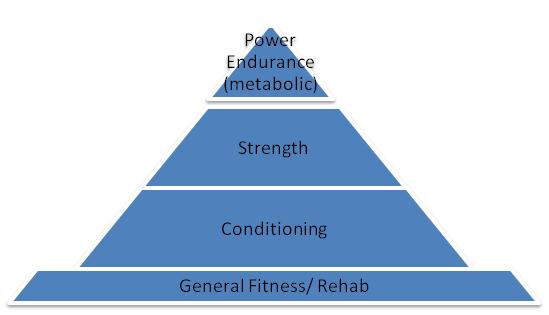
1.   The program must be planned using sound periodization and science. The program must be planned using sound periodization and science. Training should follow a developmental approach or progression. This means there should be a hierarchy of training. First it is essential for the fire rescue athlete to develop a training base that should increase the body’s functional capacity. Once this is accomplished, the intensity of the exercise is increased to emphasize strength and muscular development. In more general terms, we can also say we develop stability, then strength, and finally power. Regardless of what the training program looks like, it cannot violate this developmental approach. This is one variable that CrossFit does not do, people are getting injured from performing too many presses or pulls or jumps without having a sound base.

2.    The Fire Rescue workout program MUST place a large amount of focus on Core Strength and Balance. Low back pain is the number one reason firefighters retire early. In order for a program to be effective, it must utilize exercises that focus on the developing the glutes, shoulder girdle, hamstrings, hips and abs. 

3.    The program needs to focus on cardiovascular conditioning and recovery.  When you think of cardiovascular conditioning most people think of running or biking, which in most cases emphasizes aerobic conditioning.  Fire Rescue athletes need to have a good level of aerobic fitness but cannot overlook the value of challenging the anaerobic systems.  If you've ever humped a "charged" hose line up some stairs or dragged a victim or axed a roof open you realized the importance of anaerobic fitness.  An effective Fire Rescue fitness program will set a good cardiovascular base then challenge the cardiovascular system with intervals.  Intervals are one of the best way to simulate the high level of fitness required on the fire ground.  

4. The program must (at some point) contain full-body functional strength exercises. Functional strength exercises increase balance around the joints and helps prevent injuries by stimulating stabilizing muscles. Functional strength movements like the push-up, goblet squat, lunge, pull-up strengthen all joints of the body in numerous planes.

5. THIS IS ESSENTIAL!   Programs must include an Active warm-up and flexibility training.
The warm-ups prepare the body for movement, boosts heart rate, blood flow to the muscles, and core temperature. These movements also improve the function of your nervous system. Think of this component as taking a few minutes to warm-up a car that has been sitting outside in cold temperatures all night. The main goal of this the active warm-up and flexibility component is to improve the long-term mobility and flexibility of your muscles. The more flexible the muscle and joint around the muscle; the better the fire rescue athlete recovers and the less chance of injury.
This is not an all encompassing list but it will definitely give you enough information to help decide if a program has what it takes to be effective for the fire rescue athlete. I truly do believe that the Ultimate Fire Rescue Athlete Workout is the most effective and efficient workout for firefighters....dont take my word for it, take other (click here).  If you're looking for the best program for firefighters...try the Ultimate Fire Rescue Athlete. 

Here are some reviews of the program.  It' guaranteed to give you results...


"So far, I LOVE IT!  Lost 8 pounds in the first month and my core is stronger than ever. I feel more flexible and move faster.  The interval overhauls are a great idea and an easy way to incorporate "real" fire ground movements.  Looking forward to the next 8 weeks....."
-R.  Heltsrtun (Wisconsin)

"Great stuff! Since I incorporated your workouts into my training, my ability on the fire ground has skyrocketed.   That cardio spike can be felt at nearly every fire I ever fight." 
-A Willis (Tennessee)

"Finally someone gets it! I'm a professional firefighter searching for a fitness program that understands the demands of my job.  Aaron's program not only makes you a more efficient firefighter but a leaner, stronger athlete.   The program is written for athletes yet is practical and easy to follow.  I use the workouts with my crew, we are all seeing great progress.  I HIGHLY recommend this program to anyone who is serious about being the best Fire Rescue Athlete they can be.  ...losing weight and reaching their fitness goals."
-C. Gaylord (Minnesota)

Tuesday, September 30, 2014

One of the 10 Best Exercises for Firefighters


I recently completed a FREE report of the "10 Best Exercises for Firefighters." You can get a copy of all 10 exercises for FREE by Clicking HERE Now.  Here is one that made the list.
The Side Plank- a great core exercise...

1. Plank(s) and variations of it.  --
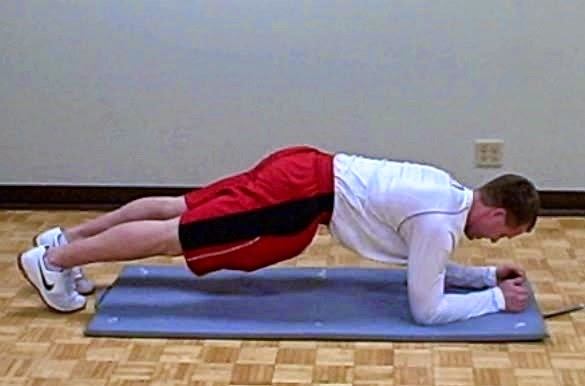
It's no surprise that the one of the exercises on this list is a core exercise. Back injuries are the number one reason firefighters and medics go on early disability so it's imperative that as a fire rescue athlete you focus on strengthening the core. The plank exercise requires no equipment and is an incredible exercise for improving core strength, endurance, and power. As mention previously, core strength is integral for the fire rescue athlete, as all movement occurs around the core. The plank will increase core efficiency allowing the body to have greater control and stability. All fire rescue athletes should include some version of the plank in their workout program. Use multiple positions: plank, side plank, and bridge.


The Prone Plank (one of the best core exercises)

Try these other variations...
Stay Safe and Healthy,
Aaron Zamzow

Friday, September 19, 2014

Start your Next Firefighter Workout with This...

Are you still warming up before your workout by jogging or biking or maybe not at all?  Each one of your workouts should start with specific active stretching movements.  In the past you may have skipped this part, but I assure you these exercises will help strengthen and even tone your body.  In fact, if you had just 15 minutes to workout I would want you do to this waram-up routine (or one like it).  Nothing else provides so much value in so little time.  The warm-ups prepare the body for movement, boosts heart rate, blood flow to the muscles, and core temperature.  These movements also improve the function of your nervous system.  Think of this routine the same as taking a few minutes to warm-up a car that has been sitting outside in cold temperatures all night.  The main goal of this routine (and those like it) is to improve the long-term mobility and flexibility of your muscles.  By doing these exercises, you will be able to increase your strength, and muscle mass which, as you know, is important to burn more fat. 
How do you do the movement?  Rather than have you hold your stretches, as in traditional stretching, you move your body into position just for a few seconds and then go back to your starting position.  The warm-up routine wakes up your muscles and not just for your workout, they remain flexible for the rest of the day.  Generally, I  would recommend performing 5 to 10 repetitions of each exercise (or just set an interval timer for 30 to 35 seconds of movement.   
Start these today and your body will quickly condition itself to the exercises, and when you're done, you'll feel warmed up, and more flexible.  You will be better prepared for not only your workout but for whatever challenges your shift or day will bring.  Give this routine a try (see video below)...


Perform 2 circuits of the following 5 exercises:
1.  Chops (5-10 reps)
2.  Knee Hugs (5-10 reps each)
3.  Spidermans (5-10 reps each)
4.  Knees side to side (5-10 reps each)
5.  Quadraped Rotations (5-10 reps each)

Stay Safe and healthy,
A. Zamzow
www.FireRescueFitness.com


Monday, August 11, 2014

Firefighter Workout Tip- The Importance of a Proper Warm-up...

Flexibility is often the most overlooked aspect of a an effective firefighter workout. Participating in an appropriate warm-up and cool down and stretching program has shown to help firefighter performance by:
  • Increasing physical efficiency and performance
    Can you do this?
  • Increasing neuromuscular coordination
  • Decreasing risk of severity of injury
  • Decreasing risk of lower back pain
  • Decreasing delayed onset muscle soreness
  • Decreasing stress and tension

What are the best ways, types and times to stretch (very important)?

This is the first of a couple of posts about flexibility.  Today I want to talk about the Active Warm-up.  If you are like most of us, you were taught how to stretch in your high school weight lifting class and you've likely continued with pretty much the same routine ever since.  Science, however, has moved on. Researchers now believe that some of the old school workout warm-up regimens are not only a waste of time but actually pose potential risk. This "old school" warm-up routine of starting your workout with a brisk walk or jog, then perform some simple body part stretches and hold them for 20 to 30 seconds (static stretching) can actually harm your body and weaken muscles. In a recent study conducted and the University of Nevada, Las Vegas athletes generated less force from their leg muscles after static stretching (holding stretches for over 10 seconds) than they did after not stretching at all. Other studies have found that this stretching decreases muscle strength by as much as 30 %.

A warm-up should do two things: loosen muscles and tendons to increase the range of motion of various joints, and literally warm up the body. When you are at rest, like when you hold a stretch, there is less blood flow to muscle and tendons and they stiffen up.

Dynamic Stretching (active warm-ups or movement prep exercises) are movements through a range of motion without holding at an end point. Dynamic stretching avoids bouncing motions and tends to incorporate more sport-specific movements. This form of stretching prepares the body for physical exertion and sports performance. Dynamic stretching increases range of motion through movement and increases blood and oxygen flow to soft tissues prior to exertion. I feel that out of all of the various components of a workout (core work, strength training, intervals) the dynamic warm-up is the most important.  Firefighters that consistently incorporate this components see great performance improvement and injury reduction.  

Active Warm-up, only hold for a few seconds


How do you do the movement? Rather than have you hold your stretches, as in traditional stretching, you move your body into position just for a few seconds and then go back to your starting position. The warm-up routine wakes up your muscles and not just for your workout, they remain flexible for the rest of the day. Here's why that's important: let's say you're walking on a winter day, and your foot slips on the ice. How well your body reacts to that slip on the ice depends on your muscle efficiency and balance.  Active warm-ups, switch on your body's small muscles, which helps with balance and increases muscle efficiency. It prepares your body for random, quick movements found on the fire ground by fine-tuning its nerves and feedback mechanisms. Generally, I recommend to do 5 to 10 repetitions of each of the warm-up exercises; not only will it feel like part of your workout, at first it might feel like a workout itself.  I listed an example of one of the active warm-ups from workout #3 from  The Ultimate Fire Athlete Workout Program.  Give these a try, you'll be better prepared for not only your workout but for whatever challenges your daily activities bring.

Click Here for a video demonstration of thoracic rotations, one of the best dynamic warm-up 
 (movement prep) exercises.


Click Here for a Video of a 4 exercise Active Warm-up routine that you should incorporate into your workout warm-up:

-Knees side to side (6-10 reps each side)
-Straight leg raises (6-10 reps each side)
-Cross-overs (6-10 reps each side)
-Step back, reach and twist (6-10 reps each side)

I feel that incorporating an Active Warm-up into your workout will increase your flexibility, speed recovery, increase your strength and ultimately prolong your career as a Fire Rescue Athlete.
Stay Safe and Healthy,
A. Zamzow
www.FireRescueFitness.com

Monday, July 21, 2014

Firefighter Workout- Intense Interval Overhaul to burn fat...

One of the best ways to incorporate fireground movements into your workouts is to perform what I call "10-minute interval overhauls."  These are 10 minutes of intervals that can vary in work and rest times that are performed after your strength training sessions.  You can read more about these "interval overhauls" by clicking here or see how to integrate them into an actual program by clicking here (FREE 28-day FRF workout).  Today I finished workout #3 of the Ultimate Fire Rescue Athlete Program and created this 10 minute overhaul....three hours later I'm still sweating.  


These intervals should be performed to the best of your ability, feel free to substitute in other exercises that you feel more comfortable with (and let me know your creative ideas). These overhauls help burn more fat and calories and as mentioned above are a great way to incorporate firefighter movements into your workout.  Give this a one a try!


After you compete the strength portion of your workout:

1.  Stepmill (or run stairs) for 2 minutes at 90 steps/min or more 
2.  Rest 30 seconds
3.  Jump Rope for 2 minutes (aim for over 300 jumps)
4.  Rest 30 seconds
5.  Stepmill (or run stairs) for 2 minutes at 90 steps/min or higher
6.  Rest 30 seconds
7.  Jump Rope for 2 minutes (aim for over 300 jumps)

Total of 10 minutes and 250-500 calories burned..

Stay Safe and Healthy,
A. Zamzow
www.FireRescueFitness.com

Sunday, June 29, 2014

Get "Firefighter Fit" and Give Back...Now is the time!

Ultimate Fire Athlete Workout and the National Fallen Firefighter Foundation.

Have you heard about the Cold Water Challenge?  Basically, its a challenge by firefighters to each other to video themselves taking a cold bucket of water to raise funds for the National Fallen Firefighter Foundation.  Well, recently my crew "called" me out... and I wimped out.

So, I decided to contact the NFFF and do one (or many) better.  For the next week, I will donate $10 (which is my profit) for each Ultimate Fire Athlete Workout Program sold!  What is the Ultimate Fire Athlete Workout?  It is the most comprehensive, efficient, effective program for fire rescue athletes.  The program includes 12-weeks of strength workouts, exercise videos, eating guidelines, fire-ground workout options, crew workouts, cardio interval workouts along with printable guides and mobile pdf versions....and much more.

Check out the video below.


Just like FireRescueFitness.com, the NFFF strives to improve the health and wellness of firefighters all over the world.  Please consider taking the Ultimate Fire Athlete Challenge, get in the shape of your life and at the same time help the NFFF.  The program is only $29.99 and comes with some great (limited time) bonuses.  You can read more about the program by
clicking HERE.


Speaking of challenges, here is one of the many challenge workouts you will get in the Ultimate Fire Athlete Program.  Give this one a try-  The Firehouse 300 (one of the more popular workouts last year).

Together we can create a healthy culture in the fire service! 
Stay safe and healthy,
A. Zamzow


Tuesday, June 24, 2014

The Firefighters Daily Fitness Check off...

Be Physically Ready for Duty- Your Daily Fitness Checkoffs.
At the beginning of each and every shift firefighters, EMTs and medic meticulously go through and check their gear (or at least they should be) to make sure that it is ready for the challenges of the day. Our equipment must be functioning properly and our rigs must be fueled and ready to go. The question that I also want you to think about is whether or not your physical equipment- brain, body, muscles are ready to go? Are you fit? Are you fueled? Here are three quick and easy things you can do at the beginning of the shift that will help you be "fit for fire."

1. Drink some water. Around most firehouses (and offices) the day and the shift starts with some coffee. We all need a pick-me-up from time to time but before you reach for that second cup, have some water. Water is the center of all metabolic processes, the more hydrated you are the better your performance. Progressive dehydration from exercise (or fire ground operations) impairs performance, mental capacity, perception of effort and can be life-threatening. With as little as a 2% body water shortage, the ability to perform a high intensity activity can be greatly impaired. Translate that on to the fire ground could mean death or injury to you or a crew member because your performance is greatly reduced. Try to drink at least 64 ounces a day, more if you are very active or its hot out.

2. Foam Roll. Foam rolling is a quick and easy way to combat the the sprains and strains of the job. A foam roller is a 3ft. long by 6in. piece of compressed foam. The idea here is that you roll your body weight along the foam roller, massaging through restrictions (adhesions) that may occur in your muscles (especially those of the back) and thus causing the nerves and muscles to relax and loosen. This allows blood to flow more freely through the muscles and allow muscles to heal and repair more efficiently. There is no universal agreement on when to roll, how often to roll, or how long to roll, but generally, techniques are used both before and after a workout (or shift in this case). Personally, I try to use the foam roller anytime my muscles (especially my back) feel tight and sore. Try to get in the habit of foam rolling at the beginning of your shifts, it will help insure you are “Fit for Duty.”

3. Eat like an athlete. Firefighters, EMTs and Medics are fire rescue athletes. We need to fuel our bodies just like we do our trucks and equipment.  Try to consume consume whole REAL (lack artificial sweeteners and preservatives) foods that are high in fiber and low in sugar, such as lean protein sources (lean beef, chicken, fish, and whey protein), fruits and vegetables (oranges, apples, strawberries, blueberries, broccoli, peppers, asparagus, carrots, nuts (almonds, cashews, walnuts), and whole grains.  Prepare healthy meals and keep the processed cakes and cookies out of the kitchen.  Click here to read about the simple rules of eating healthy.

Add these three things to your "Daily Checkoff Sheet."  These three things wont insure that you are physically ready for all the demands of the job but they will help.  We need to take action everyday, every shift to approach our jobs like the professional occupational athletes we are.  

(Bonus) #4.  Workout like a Fire Rescue AthleteThe fireground and rescue scene are very physically demanding.  We, as fire rescue athletes need a workout program that caters to the demands of the job-it needs to focus on core strength, injury prevention, cardiovascular fitness, power, strength, weight loss, and get you in the best shape of you life.  Is there such a program?  Yes, Click here to find out more.

Wednesday, April 9, 2014

Fire Station Cardio Workout Option

I've had a lot of requests for workout options that can be performed at the station with minimal equipment.  Here is an option I created for a firefighter/medic that has no equipment and only some stairs and a parking lot. This can be used as a cardio interval training workout day (for those following the 28-day Quickstart Program) and/or as a good workout to get the blood flowing.   Give it a shot!

This is a re-post from one of my more popular fire house workouts.  Try this great interval at the firehouse (or any house), it doesn't require a lot of equipment and is very short in duration yet effective.  The work intervals can be adjusted to your level of fitness.  Beginners should perform 20 seconds of work followed by 40 seconds of rest for each exercise.  Intermediates should perform 30 seconds of work followed by 30 seconds of rest and advanced (Firefit) athletes should perform 40 seconds of work followed by 20 seconds of rest for each exercise.

Click on the Video Above
Warm-up for 3 minutes with a walk or stairs then do:
Mountain climbers
Jumping Jacks
Run in place or jump rope
Burpees
Prisoner Squats
Side to Side (jumps or steps)

Beginners should repeat 1 more time (2x total)
Intermediates repeat 2 more times (3x total)
Advanced repeat 3 more times (4x total)

Cool down with 3 minutes of easy walking after you complete your circuits.

Thursday, January 2, 2014

10 Simple Rules For Fat Loss (2014 Edition)

Would you agree that a leaner athlete is a better athlete?  I know this is a "loaded" question.  A lot of the answer has to deal with the sport in which the athlete is participating.  One thing that research shows is that a leaner athlete is a "more efficient" athlete.  When it comes to firefighters, this is a
valid finding.  Efficiency in general terms, describes the extent to which time, effort or cost is well used for the intended task or purpose. So, a more efficient Fire Rescue Athlete will be able to do more work with less physical effort.  This is especially important since most of our "more intense" work as Fire Rescue Athletes comes when breathing air via an SCBA. 
 
As you create your New Years Resolution make an effort to become a leaner, more efficient Fire Rescue Athlete (or any athlete).  Here are 10 (actually 11) great tips to help you get stronger and leaner in 2014.

1.           Consume whole foods that are high in fiber and low in sugar, such as lean protein sources (lean beef, chicken, fish, and whey protein), fruits & vegetables (oranges, apples, strawberries, blueberries, broccoli, peppers, asparagus, carrots, nuts (almonds, cashews, & walnuts), and whole grains.
 
2.           Follow a consistent and effective EXERCISE program! Yes, you can lose weight and fat just by changing your eating habits. Fire Rescue Athletes need to be ready for any situation, a well planned fitness program is essential. But, very few fitness programs prepare Fire Rescue Athletes to be "fit for duty" and help decimate fat.....until now.  Click here to get your 28-day Fire Rescue Fitness QuickstartProgram for FREE.  Also, check out these programs (Click HERE) that will get you in the shape of your life.   
 
3.           Eat low-glycemic carbohydrates such as vegetables, whole-wheat
products and oatmeal instead of refined processed carbohydrates which usually come in a box or a bag.


4.           Eat some type of lean proteinat each meal. Protein helps to satisfy hunger and provide the necessary building blocks to maintain lean body mass while losing body fat.
 
5.           Eat 4-6 small meals day a day instead of the usual 2-3 large meals. Eating frequently will help regulate and boost your metabolism to burn more calories.
 
6.           Remember fat is not bad.  Consume adequate amounts of healthy fat foods such as olive oil, walnuts, almonds, Omega-3 fortified eggs, or other Omega-3 products.  Healthy fats are great antioxidants as well as help with brain function and many other essential processes that take place in the body on a daily basis. Essential Fatty Acids, according to clinical studies, could also help prevent certain diseases. To guarantee you’re consuming enough Omega-3 supplement your diet with EFA Icon.
 
7.           Consume Green Tea or Water instead of calorie-filled drinks such as soft drinks.  Green Tea has many health benefits and you should be drinking at least 1ml of non-caffeinated fluid for every calorie that you consume. This works out between (8-12) 8oz glasses of Green Tea or Water a day.
 
8.           Consistent fat loss requires good habits. If you want to create good habits, then you need plan. Therefore, map out your meals every day and follow them. If you follow your plan everyday for 2-3 weeks, you will form habits that become part of your daily routine and part of your life.  Click HERE to get your FREE guide, The Standard Operating Procedures to Eating Healthy. 
 
9.           Incorporate “superfoods” into your meal plan on a daily basis. Some examples are salmon, low-fat plain yogurt, tomatoes, spinach, mixed berries, whole oats, mixed nuts, olive oil, flax seeds(or flax meal), green tea, and various beans.
 
10.        Keep total fat intake under 30% for the day.  This can easily be accomplished by avoiding “extra” fats (and common items found around the firehouse) such as butter, sour cream, mayonnaise… This doesn’t mean you have to completely eliminate these items, just use them sparingly and avoid adding them to foods whenever possible.
 

Bonus:  Follow the 90% rule. If you can follow your plan 90% of the time, you will soon see unwanted fat melt off your body. However, if you find yourself breaking these rules more than 90% of the time, your chances of failing increase significantly. 


Stay Safe and Make 2014 a Healthy Year,
A. Zamzow
www.FireRescueFitness.com


Friday, November 22, 2013

Firefighter Fitness- does P90X work?

It’s often said that any movement is better than no movement at all.  I personally have to agree with that statement, I think its imperative that everyone (especially FireRescue Athletes) are active.  The big question milling about in the Fire Rescue field is what is the most effective type of activity for firefighters?  Ideally, we should be performing movements that support, enable, and enhance our physical skills and add to the quality of life. Our exercises should make us stronger, faster, and more capable of accomplishing just about any physical feat a "job" throws at us.
One of the more popular programs floating around firehouses these days is P90X.  P90X is the extensive fitness program from Beach Body fitness created by Tony Horton that claims it can get you "ripped in 90 days....guaranteed." Does it work?  Maybe, but as Firefighters, EMTs and Paramedics we need to be more than just "ripped" don't we?  
The purpose of this blog post today is not to give my thoughts on whether or not P90X is right for firefighters (that will come on another blog post...stay tuned).  Today's blog will list the pros and cons of P90X (just like I did with CrossFit) to help you decide for yourself if P90X measures up.
Let's take a look at the pros of P90X
--Use it anywhere - You can easily use this system at home or the firehouse.  All you need is a DVD player, some weights and a little room to move.  

--Great Workouts-- The P90x workouts are challenging, regardless of your level of fitness.  If you follow the program you will definitely get leaner and more cardiovascularly fit.
--Emphasis on Proper form - One mistake that many people make when trying to get into shape is not using the proper form with their workout exercises. With this program, you will easily be able to maintain the proper form just by using the videos and doing exactly what they ask you to do for the exercises.
--Energetic Workouts-- Tony Horton is a fun, energetic trainer that seems to keep you motivated and focused during the training sessions.  He keeps you engaged which helps with adherence to the program.
--Workout Format-  The workouts always start out with a quick warm up and stretch and finish with a cool down.  Even if you dislike stretching, the videos somehow make stretching not so painfully boring. 
--Complete workout system - If you purchase the entire system, you will get a complete system that is designed to workout your entire body and not just certain areas. The program includes workout logs, tips and a nutritional program.   All this is included tools help get results, especially the nutritional plan, its easy to follow and provides menus and guides.
--P90X provides a wide variety of workouts which prevents boredom, boosts metabolism and increases muscular strength and endurance through strategic muscle confusion. 
If you follow the workout you will see an improvement in your level of fitness.  Does it measure up to be a great fit for firefighters?  Keep reading to decide.

So, now that you know some of the pros, let's look at the cons of P90X.

--Time Investment: The schedule requires at least 60 minutes a day for 6-7 days each week. Weight and abdominal workouts are 75 minutes combined. The yoga workout lasts 92 minutes.

--Teaching Technique- The videos show people performing the exercises but doesn't spend a lot of time actually teaching the proper form. This is especially a problem because many of the exercises include lower-body movements (such as squats, dead lifts and lunges) that can be especially dangerous if they're not done properly.

--Risk of Injury: This workout is extreme with plenty of warnings given at the beginning of each video. Tony repeatedly instructs users to "bring it!" Especially determined individuals with type A personalities are more prone to “bring it” too far to the point of injury. Increase resistance and reps gradually to reduce the risk of injury, and take care to use proper form.

--Sales Pitches- Beware of plugs for P90X nutritional supplements, says Comana. "Regardless of how safe they think their dietary programs and products are, people need to recognize that supplements are not regulated by the FDA." Lastly, at the end of some (if not all) of the videos, the parent company likes to slip in advertisements for their back-end nutritional products. Pathetic. Tony's even a little guilty of going a bit over the line "hawking" these products during the video. I came to work out guys - not to be pitched on something.

--Not for everyone-- If you have a previous injury or are imbalanced in anyway, this program may not be for you. There are some movements that can potentially lead to overuse injuries (shoulder and knee tendinitis, low back pain).

--The speed of the workouts-- P90X workouts follow a specific format which means you have to keep up with the videos. while this insures a good workout it can sometimes lead to improper form and "rushed" reps along with an overwhelming feeling of "trying to keep up."

--While I like Tony's personality, I can see why he might get on some people's nerves. He does talk a lot. I guess this works out since there are other people I the videos that appear to be afraid to talk.

--The Nutrition guide-- The nutrition guide was just about as helpful as the fitness book. This plan I am sure would help me lose weight - but I am not going to follow it. I'm sure I would lose weight if I ate berries and oats for the rest of my life, but it doesn't mean I want to. Again, the design of the book is nice; I just see a lot of people wanting to follow this plan.

--Forget About Your “Beach Muscles”--The P90X program refers to the shoulders and arms as your “beach muscles” which is something that I’m sure will motivate many people. However, Firefighters, EMTs and paramedics need to have more than beach muscles. Here lies another problem, some of the workouts focus on particular muscle groups instead of full body exercise. These types of workouts don't seem to match the demands of our job, almost every movement we do on the fireground or ems scend requires compound full body functional movement.

--Muscle Confusion doesn't necessarily mean muscle adaptation-- It’s difficult to make significant gains in strength without eventually increasing exercise resistance beyond body weight. Although the P90X program does suggest using dumbbells for some exercises, even this can be limiting unless one buys a complete set which can be quite expensive and take up a lot of space. The plyometrics workout is hard on the knees and joints, so exercise caution with this workout and modify as necessary

This is not an all-encompassing list of the pros and cons of the program, I know that I missed some. I'm not going to get into whether or not I find it valuable for all firefighters...that post will come shortly. For now, absorb these cons (and pros) and of course make some comments. I welcome all comments and emails with open arms and an open mind.

Stay safe and remember to "Train like a life depends on it."

To get some great workouts for Firefighters, EMTs and Paramedics, along with the SOPs to Eating Lean in the Firehouse join my VIP email list.

Try the FireRescue Fitness 28-day Quickstart Workout for Free…and get the Standard Operating Procedure for Eating Lean in the Firehouse. Simply enter your name and email address below and the FREE reports will be instantly emailed to you. Inside, you’ll discover:

  • The essential elements of an effective Firefighter workout program 


  • How to eat lean in the firehouse 
  • Healthy Recipes for you and your Crew 
And a free subscription to my weekly FireRescue Fitness email newsletter where I’ll share with you creative and effective workouts and exercises along with nutritional advice to help you get and stay "Fit for Duty."

Fill in the information below...
          Name:
           Name: