Tuesday, April 22, 2014

How to Incorporate Fire Ground Movements into Your (firefighter ) Workout...

If you've been following my blog posts you know that I think interval training is very applicable to what we (as fire rescue athletes) do on the fire ground. Many of the programs that I create (FRF Ultimate Fire Athlete) incorporates intervals at the completion of each workout, I call them 10-minute Interval Overhauls. These interval Overhauls are a combination of exercises that challenges the total body, allows me to work on firefighter skills and simulates work on the fire ground. And they can really "jack-up" your metabolism too! You’ll discover these Overhauls can more realistically simulate the exhaustion felt on the fire ground and rescue scene.

There are thousands of options for these overhauls (which I blog about often). If you create your own, I would like to know about it so please email me your ideas.  Remember these 10- minute intervals are done at the end of your workouts, you can do them in gear, in the firehouse or in the gym (depends on what you have available). The most important piece of equipment is a good interval timer (which you can get for free). I set the timer for 10 rounds at 30-40 seconds of work and 30-20 seconds rest. You can change the times based on the exercises you choose and your level of fitness. Here are a couple of ideas to get you started.  The first option uses exercises and resources found at most firehouses. The second option I usually perform at the gym and the third just uses a treadmill.

Overhaul Option #1 (Firehouse Option)

For this finisher you need a sledge (the heavier, the harder), an old tire, some old fire hose, steps (or something to step-up on) and an interval timer set to 30 seconds of work and 30 seconds of rest for 10 intervals (10 minutes total time). 

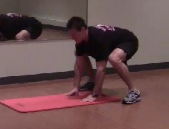
You should set-up 5 different stations (which you will repeat 2x each).    You can do them in any order:  sledges on the tire (overhead and side), run steps (you can carry equipment or weights to make it more challenging), crawls (like you are searching for a victim), battling hose-lines (see picture), and a core exercise (we like to add a plank).

You can add any fire ground exercises you wish like raising a ladder, dragging a victim, hose-line drag...be creative.

Overhaul Option #2 (Gym Option)

For this finisher you will be performing some challenging bodyweight exercises.  All you need is a jump rope, some room to move and an interval timer set at 30-40 seconds work and 30-20 seconds rest (depends on how hard you want to work). 

You will alternate between 5 different exercises and repeat them 2x each.  I like to do burpees, jump rope, mountain climbers, sprinting (if I have the room) or med ball slams and a core movement.   You can choose a bunch of different exercises, I try to choose ones that get my heart moving and incorporates the entire body.

Overhaul Option #3  (Treadmill Option)

Incline Treadmill- This is a great overall Interval Overhaul, it may not have a fire ground skill but can help you become efficient climbing. (If you really want to challenge yourself you can try to perform this with a weighted vest or SCBA).

I start the treadmill, and walk for 2 minutes to get my body ready for the motion, then I set the pace to about 4.0 mph, and the incline to 6.0 incline. This is my starting point, which I'll increase the incline level as the workout goes on. I mix in 30 second rest periods where I step off the sides of the treadmill during this workout, in order to make the intensity levels more varied and higher intensity during the work intervals.

Here's how to do this:

• First 1 minute (after 2 min warm-up): speed 4.0, incline 6.0
• 30 second rest (step off side while letting treadmill keep running)
• Next minute: speed 4.0, incline 7.0
• 30 second rest (step off side while letting treadmill keep running)
• Next minute: speed 4.0, incline 8.0
• 30 second rest (step off side while letting treadmill keep running)
• Next 1 minute: speed 4.0, incline 9.0
• 30 second rest (step off side while letting treadmill keep running)
• Next 1 minute: speed 4.0, incline 10.0
• Last minute bring treadmill back to 3.5 mph and 0 incline
Total of 10 minutes....and a lot of sweat.

Progression: the next time you perform this workout, try to increase the incline level a bit more on each interval.

One of the biggest challenges we face as fire rescue athletes is finding ways to mimic the intensity and motions of the fire ground.   These interval overhauls- Interval training combined with fire ground movement patterns (crawling, climbing, dragging) is the best way.  There are numerous options for these overhauls, you could include performing them on-air and in full gear.  Give them a try, this could also be a great option for crew workouts in the firehouse.  

Wednesday, April 9, 2014

Fire Station Cardio Workout Option

I've had a lot of requests for workout options that can be performed at the station with minimal equipment.  Here is an option I created for a firefighter/medic that has no equipment and only some stairs and a parking lot. This can be used as a cardio interval training workout day (for those following the 28-day Quickstart Program) and/or as a good workout to get the blood flowing.   Give it a shot!

This is a re-post from one of my more popular fire house workouts.  Try this great interval at the firehouse (or any house), it doesn't require a lot of equipment and is very short in duration yet effective.  The work intervals can be adjusted to your level of fitness.  Beginners should perform 20 seconds of work followed by 40 seconds of rest for each exercise.  Intermediates should perform 30 seconds of work followed by 30 seconds of rest and advanced (Firefit) athletes should perform 40 seconds of work followed by 20 seconds of rest for each exercise.

Click on the Video Above
Warm-up for 3 minutes with a walk or stairs then do:
Mountain climbers
Jumping Jacks
Run in place or jump rope
Burpees
Prisoner Squats
Side to Side (jumps or steps)

Beginners should repeat 1 more time (2x total)
Intermediates repeat 2 more times (3x total)
Advanced repeat 3 more times (4x total)

Cool down with 3 minutes of easy walking after you complete your circuits.

Friday, March 21, 2014

On-Duty Firefighter (Fire Rescue) Workout...

I get a lot of requests for workouts that can be performed on duty with equipment found at the firehouse. The other day, my crew and I performed this intensive 30 minute interval workout.  This workout will get your heart racing, challenge your core and work your muscles.

The workout consists of three, 10 minute intervals each with a different focus.  The first 10 minutes focuses on anaerobic recovery, the second ten minutes on full body strength and the last ten minutes on fire ground related movements.

The only equipment needed for the intervals are a 50 feet bundle of  fire hose (2 1/2 inch works best), some stairs if you got them (or a jump rope), a place to do body rows (pull up bar) and an interval timer (there are android phone apps for this).

Interval 1.  Sprints.  This interval requires a little space, you can use the garage bay or parking lot.  Set your interval timer to 30 seconds of work and 30 seconds of rest for 10 rounds (10 minutes total).  Start the timer and walk around the bay or parking lot for the first 30 seconds.  The second 30 seconds you should sprint at 50% pace.  Continue to walk during the first 30 seconds (recovery or rest) of each minute and running (sprints) the second 30 seconds for 10 rounds total.  As each minute progresses your speed and effort level should follow suit.  For example the first sprint should be at 50%, the second 60%, the third 70%, the fourth 80% and so on.  As soon as you finish your last interval immediately reset the timer and proceed to interval #2.

Interval 2. Full body strength.  This interval consists of 3 exercise performed with either 30 or 40 seconds of work (40 for intermediates and 30 seconds for beginners) and 20 or 30 seconds of rest.  You should do each exercise 3 times for a total of 9 minutes, the last minute you should hold a plank.
Here are the exercises:


 **Repeat this circuit 3 times then hold the plank for the final minute.  After you complete the plank rest the times and progress to interval 3.

Interval 3.  Fire ground Movements.  This interval should be performed with the same time parameters as interval 2.  This interval will require you to perform exercises (or movements) that are synonymous with the fire ground.  Here are the exercises"

  • Climbing stairs
  • Floor crawl
  • Hose Drag (grab both couplings of the 50 ft of hose pull, for more of a challenge pull the LDH hose)

 **Repeat this circuit 3 times then hold the plank for the final minute.  After the last interval, grab some water and foam roll.


Tuesday, March 18, 2014

Tabata Workouts for Firefighters

Have you heard of Tabata?  This is an unusual style workout floating around a lot of gyms and firehouses lately.  I wanted to explain what it is and  how we, as fire rescue athletes, can incorporate it into an effective workout.

“Tabata” is the name of a particular type of workout program that provides increased fat burning and oxygen efficiency in a short period of time.   Instead of hours upon hours of exercise, Tabata can be completed in just 4minute cycles.

Tabata training was developed by a Japanese researcher named Dr. Izumi Tabata who was working with Olympic speed skaters.  In his study, he found that a control group using his training method of 20 seconds work, 10 seconds rest, for eight intervals, saw greater VO2 Max improvement than the other group that trained with 60 minute sessions.  The real question that you want to know is:  "How can this apply to fire rescue athletes instead of Olympic speed skaters? 

We know  that there are few activities more physically demanding than fighting a working fire or carrying a patient down and around stairs.  In many cases fire rescue athletes are asked to work at near maximal heart rate and strength under very extreme and stressful conditions.  This is  the reason why high intensity training  like Tabata should be included as part of our fitness program. 

If you have followed my posts in the past you know how I believe that intervals have a huge place in the fire rescue athletes workout.  You can read that post by clicking here.   
So what is the Tabata protocol?   A Tabata workout is an interval training cycle of 20 seconds at maximum effort, followed by 10 seconds of rest.  The cycle is repeated without pause 8 times for a total of four minutes.   Try to use this protocol at the end of a strength workout as a substitute to the 10-minute Interval Overhaul. 

Gotta Love Burpees!
Tabata Protocol Interval Overhaul-- Choose 2 different exercises and switch between them every 20 seconds with 10 seconds of rest between.  If you want to focus on more cardio recovery you can perform mountain climbers and burpees or row machine and treadmill.  You can also use fireground movements and switch between them like sledges, drags, stairs or battling hoselines

Cardio Tabata Overhaul Option

20 seconds mountain climbers
10 seconds rest
20 seconds burpees
10 seconds rest
Repeat 3x (for a total of 4 rounds)

Fireground Tabata Overhaul Option
20 seconds sledge hammers (on tire or other)
10 seconds rest
20 seconds stairs or dummy drags/ farmers carry
10 seconds rest
Repeat 3x (for a total of 4 rounds)

**The original Tabata protocol was done on a bicycle and performed at a very high intensity.  Try to perform the 20 second work intervals with as high intensity as you possibly can. 


You can also use this protocol with strength and core exercises, stay tuned for a full body Tabata workout for firefighters (coming soon).  


Thursday, March 13, 2014

Firefighter Nutrition Tip...Don't Eat This

Try to follow this eating pattern!
Don't Eat this Sweetener...
One of the most evil products that is present in huge quantities in our food supply these days is high fructose corn syrup (HFCS). Products that contain HFCS are highly modified from their natural state by mass processing to satisfy economical and/or food preservation needs. This results in products that are much more harmful to our bodies than the original substance. The food manufacturers are only concerned with maximizing profits-- and do not take into consideration the consumer’s health.  Not only does HFCS contribute significantly to promoting fat storage, but it also contributes to a host of other health problems. If you’re serious about getting "fit for duty," losing body fat and maintaining a lean and healthy body, you must avoid HFCS as much as possible, if not altogether. The answer to avoiding HFCS is quite simple – don’t buy processed foods! Choose whole natural foods instead and your body will thank you.

HFCS is used in a ton of products on the market today. It’s most prevalent in sodas, breakfast syrups, fruit juices, and any other sweetened beverages.  HFCS is also found in ketchup, sweetened cereals, cakes, cookies, pasta sauces, barbeque sauces, salad dressings, and many other products. It began to be used in smaller quantities by food manufacturers in the 1970’s. It has now become the number one sweetener used in most food products due to its comparatively low cost. Some health experts have even correlated the rise in the use of HFCS in our food supply with the rise in obesity, since they have a remarkably similar trend. Although it’s quite possible that there may be a link between the two, I don’t fully agree with that assumption, since the population has also become much more sedentary over the years.

The problem with HFCS is that it is not processed by our bodies in the same way as other sugars and tends to be more lipogenic (promotes fat storage). Also, your body doesn’t readily recognize the calories ingested from HFCS, so it does nothing to satisfy your appetite. The bottom line is, if you want to be lean and strong, stay away from the empty calories of HFCS. If you need to buy sweetened products, look for products that use natural un-processed sweeteners like raw honey, molasses, or organic maple syrup and use them in moderation. If you want a non-caloric alternative, whatever you do, DON’T use artificial sweeteners try a more natural sweetener called Stevia.  Not only are artificial sweeteners potentially dangerous chemicals in the long run, but studies are also indicating that they promote fat gain and high insulin levels due to several complicated factors in the body.

Sunday, February 9, 2014

Firefighter Fitness Predictions for 2014

Now everyone loves predictions and I'm no stranger.  After over 20 years in the fitness industry, I've seen my fair share of trends (remember leg warmers and step aerobics...).  Well, this year I'm going to put my experience to work and create some predictions.   Take a look!

2014 Fitness Prediction #1 – Shorter, High Intensity  Workouts Will Dominate. 
This year, your workout is going to get a lot more intense...or at least it should.  High-intensity interval training is poised to hit the mainstream in 2014, according to a new survey from the American College of Sports Medicine.   High intensity interval training, or HIIT, refers to workouts in which bouts of intense exercise are alternated with bouts of either rest of low-intensity activity. HIIT results in more fat loss than long, slow exercises like jogging, some studies have shown, and it's beneficial for your heart, too. But the best part: It's the most efficient workout around. For those of you that have followed Fire Rescue Fitness, you know I've been preaching and creating these workouts for a long time. I personally think that HIIT is one of the best workouts for firefighters but, you have to work your way up to it. If you haven't been regularly exercising, keep it slow to start.   You'll also here a lot more about workout finishers (like my interval overhauls) and tabata style workouts.

2014 Fitness Prediction #2 – Paleo & Intermittent Fasting Will Be the Diet rages. 
Currently, some of the most searched health & wellness phrases are Paleo, Vegan, Weight Watchers, and the 5:2 fasting program.   Also, if you look at the most searched terms for diets in Google, you'll find that Paleo and Intermittent Fasting are pretty much #1 and #2 trending.    My prediction is that we will see these search terms dominate in 2014.  Honestly, I follow a modified Paleo diet and occasionally do some fasting.  I love both and use both in varying ways because it keeps "eating" (not dieting) simple and easy to understand.   Also, the quickest way I know to get anyone to lose weight and body fat is to have them follow "modified" Paleo and/or a 16-8 intermittent fasting regimen.  Its an effective way to eat because it limits calories and focuses on eating real foods.   

Speaking of an easy way to eat...check out and get my Standard Operating Procedures for Eating Healthy in the Firehouse.

Prediction #3  Dynamic Warm Ups, and Self-Myofascial release will be THE way everyone in the gym starts their workouts.
  
Gone are the days of starting your workout with a light jog coupled with 
long (ineffective) stretches.  Research proves that these types of warms ups do 
nothing for the body and can increase your propensity for injury.  Almost all of the gyms here (and now firehouses) in Madison have foam rollers available. 


Effective programs must include an Active warm-up and flexibility training. The warm-ups prepare the body for movement, boosts heart rate, blood flow to the muscles, and core temperature. These movements also improve the function of your nervous system. Think of this component as taking a few minutes to warm-up a car that has been sitting outside in cold temperatures all night. The main goal of this the active warm-up and flexibility component is to improve the long-term mobility and flexibility of your muscles. The more flexible the muscle and joint around the muscle; the better the fire rescue athlete recovers and the less chance of injury.  Here is an article that talks about this subject. 

Fitness Prediction #4 - Transformation and Fitness Challenge Programs Will Be On The Rise

The first transformation program that made a real impact in the fitness industry was Bill Phillips body for Life Challenges.  Since then,  the transformation  angle has lost some luster but that will change this year.  It seems now that there are a lot of different fitness-related companies sponsoring these type of competitions.   Personally, my fire department union has sponsored a fitness challenge that has been highly successful.  Last year we had over 33% of the department compete in the challenge and made a great stride in creating a more healthy culture around the firehouses.  You can get an overview and rules of the contest from the Fitness Challenge website (Click Here).  If you're interested in creating your own fitness challenge, I can help, email mewith questions.

Fitness Prediction #5 for 2014- Cross Fit Will Reach it's Breaking Point
The injuries are piling up and so is the frustration with Cross Fit.  I think that Cross Fit has hit its peak.  Don't get me wrong, Cross Fit has a lot of good components to it but lacks sound periodization and planning.  I think it's time that people take a look at implementing the good aspects of Cross Fit and losing these negatives.  I wrote an article about Cross Fit that lists the good and bad, you can read it HERE.  Fire Rescue Athletes need  to challenge themselves to improve their fitness but should emphasize conservative training over risking injury.  I am a big advocate to training "hard" but safe.  There are no exceptions and no excuses for bad form. 

Looking for a program that uses sound periodization, gets results and takes your level of fitness to the next level?  Check out the FREE 28-day Fire Rescue Fitness Quickstart Program here.


Thursday, January 2, 2014

10 Simple Rules For Fat Loss (2014 Edition)

Would you agree that a leaner athlete is a better athlete?  I know this is a "loaded" question.  A lot of the answer has to deal with the sport in which the athlete is participating.  One thing that research shows is that a leaner athlete is a "more efficient" athlete.  When it comes to firefighters, this is a
valid finding.  Efficiency in general terms, describes the extent to which time, effort or cost is well used for the intended task or purpose. So, a more efficient Fire Rescue Athlete will be able to do more work with less physical effort.  This is especially important since most of our "more intense" work as Fire Rescue Athletes comes when breathing air via an SCBA. 
 
As you create your New Years Resolution make an effort to become a leaner, more efficient Fire Rescue Athlete (or any athlete).  Here are 10 (actually 11) great tips to help you get stronger and leaner in 2014.

1.           Consume whole foods that are high in fiber and low in sugar, such as lean protein sources (lean beef, chicken, fish, and whey protein), fruits & vegetables (oranges, apples, strawberries, blueberries, broccoli, peppers, asparagus, carrots, nuts (almonds, cashews, & walnuts), and whole grains.
 
2.           Follow a consistent and effective EXERCISE program! Yes, you can lose weight and fat just by changing your eating habits. Fire Rescue Athletes need to be ready for any situation, a well planned fitness program is essential. But, very few fitness programs prepare Fire Rescue Athletes to be "fit for duty" and help decimate fat.....until now.  Click here to get your 28-day Fire Rescue Fitness QuickstartProgram for FREE.  Also, check out these programs (Click HERE) that will get you in the shape of your life.   
 
3.           Eat low-glycemic carbohydrates such as vegetables, whole-wheat
products and oatmeal instead of refined processed carbohydrates which usually come in a box or a bag.


4.           Eat some type of lean proteinat each meal. Protein helps to satisfy hunger and provide the necessary building blocks to maintain lean body mass while losing body fat.
 
5.           Eat 4-6 small meals day a day instead of the usual 2-3 large meals. Eating frequently will help regulate and boost your metabolism to burn more calories.
 
6.           Remember fat is not bad.  Consume adequate amounts of healthy fat foods such as olive oil, walnuts, almonds, Omega-3 fortified eggs, or other Omega-3 products.  Healthy fats are great antioxidants as well as help with brain function and many other essential processes that take place in the body on a daily basis. Essential Fatty Acids, according to clinical studies, could also help prevent certain diseases. To guarantee you’re consuming enough Omega-3 supplement your diet with EFA Icon.
 
7.           Consume Green Tea or Water instead of calorie-filled drinks such as soft drinks.  Green Tea has many health benefits and you should be drinking at least 1ml of non-caffeinated fluid for every calorie that you consume. This works out between (8-12) 8oz glasses of Green Tea or Water a day.
 
8.           Consistent fat loss requires good habits. If you want to create good habits, then you need plan. Therefore, map out your meals every day and follow them. If you follow your plan everyday for 2-3 weeks, you will form habits that become part of your daily routine and part of your life.  Click HERE to get your FREE guide, The Standard Operating Procedures to Eating Healthy. 
 
9.           Incorporate “superfoods” into your meal plan on a daily basis. Some examples are salmon, low-fat plain yogurt, tomatoes, spinach, mixed berries, whole oats, mixed nuts, olive oil, flax seeds(or flax meal), green tea, and various beans.
 
10.        Keep total fat intake under 30% for the day.  This can easily be accomplished by avoiding “extra” fats (and common items found around the firehouse) such as butter, sour cream, mayonnaise… This doesn’t mean you have to completely eliminate these items, just use them sparingly and avoid adding them to foods whenever possible.
 

Bonus:  Follow the 90% rule. If you can follow your plan 90% of the time, you will soon see unwanted fat melt off your body. However, if you find yourself breaking these rules more than 90% of the time, your chances of failing increase significantly. 


Stay Safe and Make 2014 a Healthy Year,
A. Zamzow
www.FireRescueFitness.com