Monday, August 6, 2012

Foam Rolling for Better Fitness

People tend to measure how effectively they’ve worked out by how sore they are the following days.  Let me ask you:  How good is a workout that leaves you so sore that you can’t workout for the next 3 days?   What most people don’t realize is that your body improves and adapts to stress on the days you rest.  The better and more rapidly you recover, the more quickly your body adapts.This is especially important for the Fire Rescue Athlete, a hard workout on Monday, followed by a difficult shift on Tuesday can lead to an injury on Wednesday. 
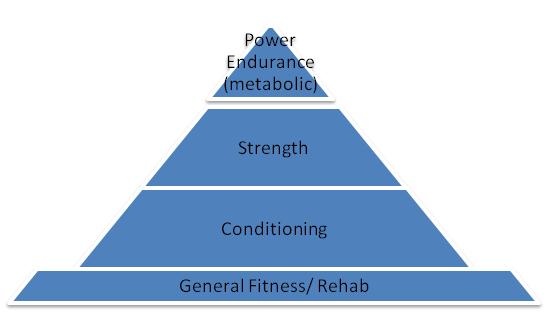
Fire fighter fitness workout progression
We all know that our job is dangerous and that we as Fire Rescue Athletes are more likely to get injured on the job than any other profession.  So this brings me to the question, what is the best way to combat against this potential for injury? My research shows that athletes that consistently work their core, have a well planned periodized workout program and an effective stretching and recovery program are less likely to have injury than those that don't.  If you've followed my past posts you know how to address working your core,  and periodizing your workout so today I wanted to talk a little about exercise and shift recovery.
Have you heard about the foam roller?
A decade ago, strength coaches, personal trainers and athletic trainers would have looked quizzically at a 36-inch long cylindrical piece of foam and wondered, "What is that for?" Today, nearly every fitness center and most strength and conditioning facilities contain an array of foam rollers of different lengths and consistencies.
A foam roller is a 3ft. long by 6in. piece of compressed foam.  The idea here is that you roll your body weight along the foam roller, massaging through restrictions (adhesions) that may occur in your muscles (especially those of the back) and thus causing the nerves to relax and loosen.  This allows blood to flow more freely through the muscles and allow muscles to heal and repair more efficiently.  The exercise physiology geeks (peer fitness trainers) refer to this concept as "Self-Myofascial Release”.   You will probably love and hate the foam roller.  I encourage you to try it more than a week before formulating an opinion on its effectiveness.   Just like a massage, there will be some discomfort when you hit the right spot. Over time the foam roller will get easier.  Your muscles will be healthier and have less adhesions (knots) making your body and back feel better.

Check out the video below then give foam rolling a try.

How can you fit foam rolling into a firefighter fitness program? 
Check out the FREE FRF 28-day Quickstart Workout program which includes the SOP's to Lean Eating in the Firehouse to see how.

Please leave comments or send me an email with your thoughts about "foam rolling."
Stay Safe,
A. Zamzow

Sunday, July 22, 2012

Fire Station Workout- Intervals for Cardiovascular Fitness

I've had a lot of requests for workout options that can be performed at the station with minimal equipment.  Here is an option I created for a firefighter/medic that has no equipment and only some stairs and a parking lot. This can be used as a cardio interval training workout day (for those following the 28-day Quickstart Program) and/or as a good workout to get the blood flowing.   Give it a shot!

This is a great interval to perform at the firehouse, it doesn't require a lot of equipment and is very short in duration yet effective.  The work intervals can be adjusted to your level of fitness.  Beginners should perform 20 seconds of work followed by 40 seconds of rest for each exercise.  Intermediates should perform 30 seconds of work followed by 30 seconds of rest and advanced (Firefit) athletes should perform 40 seconds of work followed by 20 seconds of rest for each exercise.

Click on the Video Above
Warm-up for 3 minutes with a walk or stairs then do:
Mountain climbers
Jumping Jacks
Run in place or jump rope
Burpees
Prisoner Squats
Side to Side (jumps or steps)

Beginners should repeat 1 more time (2x total)
Intermediates repeat 2 more times (3x total)
Advanced repeat 3 more times (4x total)

Cool down with 3 minutes of easy walking after you complete your circuits.

Tuesday, July 3, 2012

Exercise Upgrade for the Fire Rescue Athlete- Captain Morgan Bicep Curls

Firefighters, EMTs and Paramedics frequently lift heavy object whether it be a cot, a hose line or a heavy piece of equipment.   Lifting heacy objects can take its toll on the body if you are not trained for it but Fire Rescue Athletes have to lift heavy objects in akward positions.  Today's exercise upgrade addresses this issue, it takes the traditional bicep curl and adds some core and balance work to it.  Check it out below.

Give this exercise a try and to find a more efficient way to incorporate this exercise into a fire rescue athlete workout program check out the FREE FRF 28-day Quickstart Program.


Please add your thoughts about this exercise and forward this on to another Fire Rescue Athlete.

Tuesday, June 26, 2012

Are You Firefighter Fit?

A couple weeks ago I published a blog post about "defining Firefighter Fit." I appreciate the numerous responses and comments about this question (see that blog post here) and today want to follow up and add some more information and questions about this topic. One of the consensus opinions expressed when asked to define "firefighter fit" was that a firefighter needs to be physically ready for any situation whether it’s advancing a heavy hose line, lifting a patient onto the cot, forcing a door or dragging someone out of the building. My reply to that statement is "how can we test for these situations?" The CPAT? The CPAT was designed to do just that and from my experience it is a great test, challenging and applicable to the actions required on the fire ground. For those that don't know about the CPAT (read more here), it is a timed pass/fail standardized test that consists of eight separate events:

· Stair Climb
· Hose Drag
· Equipment Carry
· Ladder Raise & Extension
· Forcible Entry
· Search
· Rescue
· Ceiling Breach &Pull
During the CPAT, you must progress along a predetermined path from one event to the next in a continuous manner. Participants wear a 50-pound (22.68-kg) vest to simulate the weight of self-contained breathing apparatus (SCBA) and firefighter protective clothing. An additional 25 pounds (11.34 kg), using two 12.5-pound (5.67-kg) weights that simulate a high-rise pack (hose bundle), is added to your shoulders for the stair climb event. You have 10 minutes and 20seconds to complete all eight tasks.
As I mentioned above I find that it is a very challenging and applicable skill test for firefighters. The problem with the test is that it requires special equipment and lots of room. So, what are tests that can be administered in a regular gym or firehouse that are good assessors of firefighter fitness?

My research on this topic has found (please let me know your thoughts below) that there are 5 specific tests that can help indicate a firefighters level of fitness. Let it be known that these test do not test the skill level of the firefighter (raising ladders, search and rescue, forcible entry) but are a good correlation. I do intend to post about some good skill related courses soon, so stay tuned. These tests are the plank, push-up, mile run, overhead squat, and body composition. (As mentioned before please comment on whether you agree or not). Each one of these tests assess a valuable fitness component to firefighting (fire rescue athlete); the plank tests core strength, the push up- muscular endurance, overhead squat- functional fitness, the mile run- cardiovascular fitness, and body composition- overall health. Try each test and let me know your results. Are you Firefighter Fit? Or are there better ways to test firefighter fitness?

Plank (core stability)
You’ll need something long, solid, light, and straight, like a broom handle or dowel. Assume a basic plank position, with your weight resting on your forearms and toes. Your body should form a straight line from neck to ankles. You want your feet hip-width apart and your elbows directly below your shoulders. Have a friend set the dowel along your back. It should make contact at three points: the back of your head, between your shoulder blades, and your tailbone. Hold that position. Stop if your body loses contact with the dowel at one of these three points.
THE SCORECARD
Below average= You can’t hold a basic plank 60 seconds
Average= You go 60 seconds
Above average= You can hold a plank 60 seconds with your feet elevated on a bench
FireFit= You can hold a plank with your arms extended for 60 seconds

Overhead Squat (functional fitness)
As with the basic plank, you’ll need a broom handle or dowel for this test, the overhead squat. Stand in front of a mirror with your feet shoulder-width apart, holding the dowel straight above your shoulders with your hands wide (about 1½ times shoulder width) and your elbows locked. Push your hips back and lower yourself into a squat as you keep the dowel directly above your head, your knees over your toes, and your heels on the floor. Go down as far as you can without changing the position of your lower back, leaning forward, pulling your knees inward, or rising up on your toes. A word to the wise: This test is much harder to complete with perfect form than you think, so don’t take it lightly.
THE SCORECARD
Below average= You can’t bend your knees 90 degrees without leaning forward
Average= You can bend your knees more than 90 degrees, but only if your heels come off the floor
Above average= You can do a full squat (top of your thighs parallel to the floor) with your heels on the floor and without leaning forward
Fire Fit= You can perform a perfect overhead squat with a 45-pound Olympic barbell


Push up test (muscular strength)
Assume a pushup position with your hands directly below your shoulders, your feet hip-width apart, your weight resting on your hands and toes, and your body in a straight line from neck to ankles. Lower your body until your chest is about an inch above the floor, pause for 1 second (this is essential), and then return to the starting position. Complete as many consecutive pushups as you can while maintaining strict form.

THE SCORECARD
Below average= fewer than 15 pushups
Average= 16 to 29 pushups
Above average= 30 to 44 pushups
Fire Fit= 45+ pushups

Mile Run (endurance)
It’s best to test yourself outdoors on a track or flat stretch of trail or pavement where your distance can be accurately measured. If you choose to run on a treadmill, make sure you elevate it to 2 degrees to make up for the mechanical assistance you’re receiving from the moving belt. Once you’re sure of the distance, start your stopwatch and take off.

THE SCORECARD
Below average You need 12+ minutes to run a mile
Average 9 to 12 minutes
Above average 6 to 9 minutes
Fire Fit =You run a mile in under 6 minutes

Body Composition (overall health)
In physical fitness, body composition is used to describe the percentages of fat, bone and muscle in human bodies. Because muscular tissue takes up less space in our body than fat tissue, our body composition, as well as our weight, determines leanness. Two people at the same height and same body weight may look completely different from each other because they have a different body composition. Your body composition can directly affect your personal performance in activities of daily living as well as on the job. Certain body composition levels are strong indicators pointing to your risk level of certain physical diseases. There are many ways to determine body composition, I prefer to use the 3-site method, it's easy and a good indicator (read more about body composition testing here)

THE SCORECARD for MEN
Below average= 19-25% body fat
Above average= 13-18% body fat
Fire Fit = 12% body fat or below

THE SCORECARD for WOMEN
Below average= 26-31% body fat
Above average= 19-25% body fat
Fire Fit = 18% body fat or below
Give these tests a try and see how you measure up.  If your having difficulties or don't score as high as you would like,  JOIN the FireRescue Athlete Nation and get the FREE FRF 28-day Quickstart Workout program which includes the SOP's to Lean Eating in the Firehouse.

Please leave comments or send me an email with your thoughts about "Are YOU Firefighter Fit."
Stay Safe,
A. Zamzow
Monday, June 18, 2012

Firefighter Fitness Upgrade- The Row

Last week I had such a great response to the exercise upgrade post (Alternate Arm DB Chest Press) I decided to make it a weekly post.  This week I'll show you ways to change the row exercise to integrate more core and balance work.  Firefighters, emts and paramedics are constantly required to lift loads in very awkward positions. In order to prepare for these scenarios fire rescue athletes must focus their workouts on training not only on and in stable positions but unstable as well. Here is a great row exercise upgrade to engage more stabilizing and core muscles.


Please note that this exercise requires a lot of core strength and shoulder stability, lower your weights until you feel comfortable with the exercise.

For more exercise upgrade ideas continue to check back to www.FireRescueFitness.com

For a great FREE workout program that incorporates exercise upgrades for Fire Rescue Athletes  JOIN the FireRescue Athlete Nation and get the FREE FRF 28-day Quickstart Workout program which includes the SOP's to Lean Eating in the Firehouse.

Thursday, June 14, 2012

Krill Oil vs. Fish Oil

KNOW ANYONE ON CHOLESTEROL LOWERING MEDICATIONS?

Most firefighters know about the correclation between heart disease and on-duty deanths (if not read about it here).  Often times firefighters and other individuals taking prescription medications can become depleted of important nutrients in the body. In the case of Statin medications (Lipitor, Crestor, Zocor, Pravachol, etc) which help to lower LDL levels in the body, can also deplete the body of an important element called Co-Enzyme Q-10. A deficiency in Co-Q 10 can lead to heart failure because it's an enzyme that provides energy to the heart. Other studies have shown that a body deficient on Co-Q-10 can lead to the inflammation of your tendons and ligaments, a decrease in collagen and elastin, as well as a weakening of other muscle tissues throughout the body. Co-Enzyme Q-10 can be found in supplement form and anywhere between 200-1000mg is recommended. Ask your doctor if this is something that applies to you!

On a similar note, I've been doing a lot of research on fish oil vs. kril oil. I've found that fish oils (in a lot of cases) miss the boat (no pun intended) and they usually come with the dreaded "fish burp." I think that krill oil is one of the best sources of Essential Fatty Acids.

Krill Oil may also:

Help protect your heart
Improve your memory
Strengthen your immune system
Minimize the damage caused by free radicals
Reduce joint pain and PMS symptoms
Aid the fat loss process

CLICK HERE to check out what I think is a great way to naturally lower cholesterol and hopefully prevent you from being another Firefighter statistic.

PS - Again, there are all sorts of lousy supplements on the market. But a solid Krill Oil product is NOT one of them. It's an extremely powerful nutritional product with extraordinary benefits. For the best quality Krill Oil get Prograde Nutrition's EFA Icon
PPS - Prograde also includes the research studies on Krill Oil. Just click on one of the links above to check those out. You'll find them at the bottom of the page.

PPPS - My Dad has been taking the krill oil for about 8 weeks and has noticed a difference in his energy and lowered his cholesterol.

Stay Safe and Healthy,
A. Zamzow

Sunday, June 3, 2012

Firefighter Fitness Exercise Upgrade- DB Chest Press

Fire Rescue Athletes as asked to work in various unstable environments.  Firefighters, Paramedics and EMTs are often times lifting and moving heavy loads in very awkward positions.  In order to prepare for these scenarios fire rescue athletes must focus their workouts on training not only on and in stable positions but unstable as well.  Here is a great exercise upgrade to engage more stabilizing and core muscles.

Please note that this exercise requires a lot of core strength and shoulder stability, lower your weights until you feel comfortable with the exercise. 

Please check out www.FireRescueFitness.com for more firefighter fitness exercise upgrades.