Showing posts with label Paramedic fitness. Show all posts

Sunday, August 18, 2013

Essential Components of a Fire Rescue Fitness Program....revisited.

This is a re-post of one of my more popular articles that needs to be emphasized. Without proper planning, your fitness program may actually be setting you up for failure.  Read the article below...how does your current fitness program measure up?

This blog topic is one near and dear to my heart and your career--Workouts for Fire Rescue Athletes. Over the last couple of months I've been writing about some of the more popular workouts seen in firehouses across the world. You can read about them here and here or listen to a great radio interview about this topic HERE

I've received a ton of feedback about those articles both good and bad. One thing I have not done yet is to answer the highly debated question...."What is the best workout for Firefighters, EMTs and Paramedics (Fire Rescue Athletes)?  More importantly what are the components of the best Fire Rescue Athlete Workouts? 

Without further delay, here is my answer (drum roll please)....

There is no single perfect program for fire rescue athletes. We all know we work in very uncertain situations and circumstances so we have to be ready for almost anything and no single workout program can prepare you for that.  There are some common components though that every fire rescue athlete should think about when evaluating a workout program. 
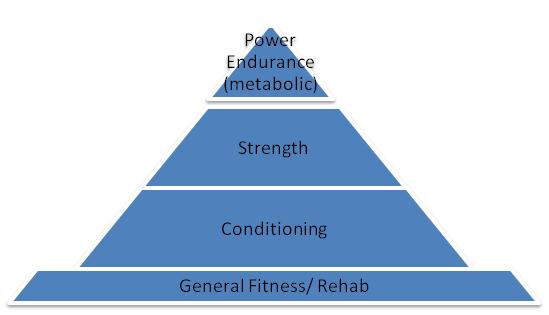
1.   The program must be planned using sound periodization and science. Training should follow a developmental approach or progression. This means there should be a hierarchy of training. First, it is essential for the fire rescue athlete to develop a training base that should increase the body’s functional capacity. Once this is accomplished, the intensity of the exercise is increased to emphasize strength and muscular development. In more general terms, we can also say we develop stability, then strength, and finally power. Regardless of what the training program looks like, it cannot violate this developmental approach. This is one variable that CrossFit does not do, people are getting injured from performing too many presses or pulls or jumps without having a sound base.


2.    The program MUST place a large amount of focus on Core Strength and Balance. During the course of their career, almost 50% of all fire rescue athletes will hurt their back while on duty. Low back pain is the number one reason firefighters retire early. In order for a program to be effective, it must utilize exercises that focus on the developing the glutes, shoulder girdle, hamstrings, hips and abs. Notice that I didn't say anything about a "six pack" of abs. That is one of the cons of P90X; the program is more concerned about beach muscle than core strength.

3.    The program needs to focus on cardiovascular conditioning and recovery.  When you think of cardiovascular conditioning most people think of running or biking, which in most cases emphasizes aerobic conditioning.  Fire Rescue athletes need to have a good level of aerobic fitness but cannot overlook the value of challenging the anaerobic systems.  If you've ever humped a "charged" hose line up some stairs or dragged a victim or axed a roof open you realized the importance of anaerobic fitness.  An effective Fire Rescue fitness program will set a good cardiovascular base then challenge the cardiovascular system with intervals.  Intervals are one of the best ways to simulate the high level of fitness required on the fire ground (click here for a great interval program).  

4.  The program must (at some point) contain full-body functional strength exercises.  Functional strength exercises increase balance around the joints and helps prevent injuries by stimulating stabilizing muscles.  Functional training is in essence is a full-body approach to core training and are effective in athletic injury rehab and prevention.   Functional strength movements like the push-up, goblet squat, lunge, pull-up strengthen all joints of the body in numerous planes.
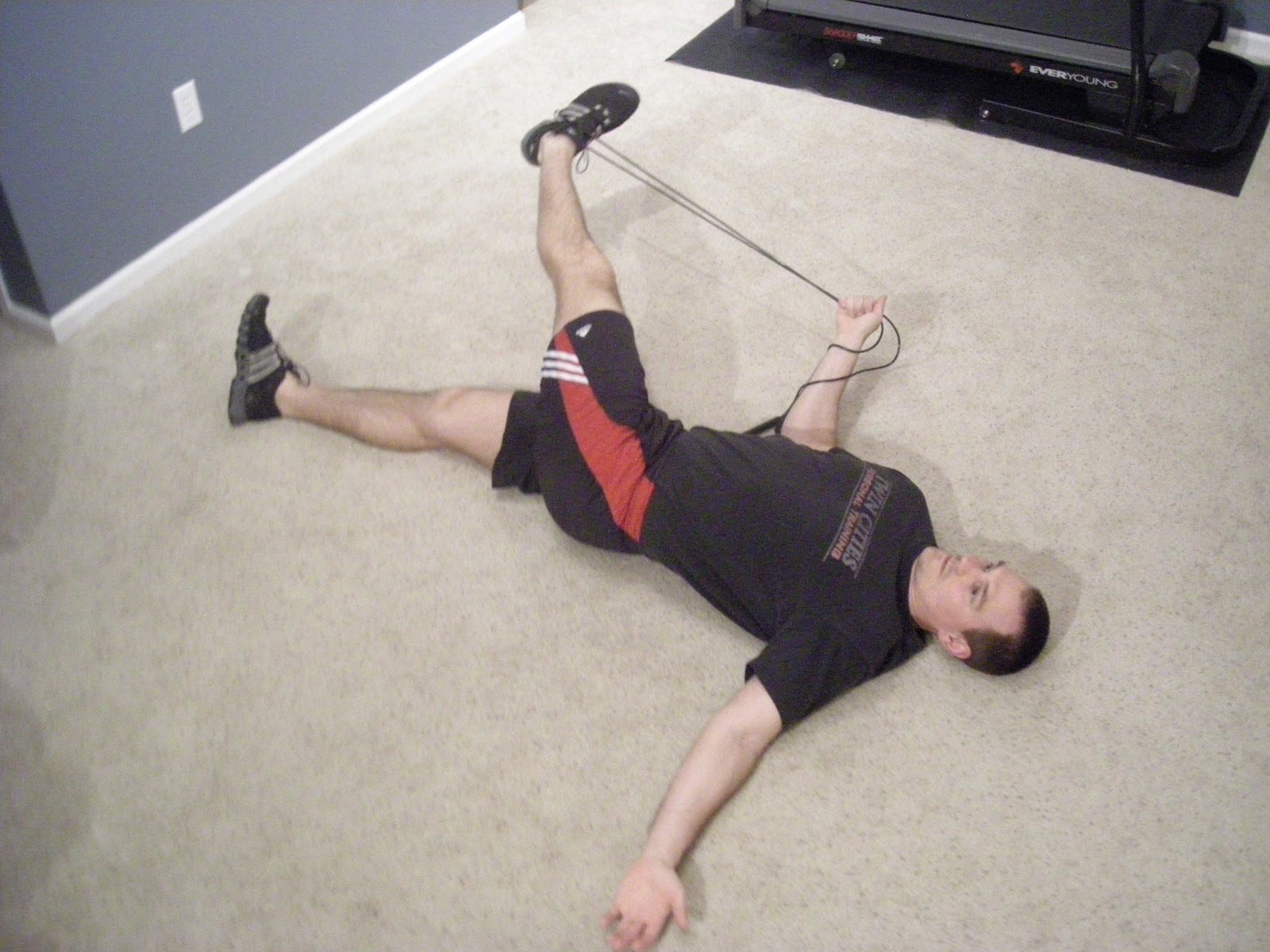
5. Programs must include an Active warm-up and flexibility training. The warm-ups prepare the body for movement, boosts heart rate, blood flow to the muscles, and core temperature. These movements also improve the function of your nervous system. Think of this component as taking a few minutes to warm-up a car that has been sitting outside in cold temperatures all night. The main goal of this the active warm-up and flexibility component is to improve the long-term mobility and flexibility of your muscles. The more flexible the muscle and joint around the muscle; the better the fire rescue athlete recovers and the less chance of injury.

This is not an all encompassing list but it will definitely give you enough information to help decide if a program has what it takes to be effective for the fire rescue athlete. Take a look at your current program and see if it contains these components...if not, CLICK HERE to get a FREE Fire Rescue Fitness Workout that does.

Friday, March 8, 2013

The Firehouse 300 Rep Challenge


300 Rep Challenge for the Firehouse
This is a great 300 challenge workout that you can do in the firehouse with minimal weight.  The goal of the workout is to finish in the shortest amount of time possible, not by rushing your reps but by not resting….

All you need for this challenge workout is a stability ball and a weight.  The object of the workout is to complete 50 reps of each exercise (300 total) as quickly as possible.  There is a catch of course, each rep has to be performed in a controlled manner and bad reps don’t count.   Safety first, form is your biggest focus.

You can do the reps in any order and even mix and match if needed as long as you do 50 of each.  Personally I like to choose two exercises and alternate between them until the reps are completed.  As a guideline choose a weight that is around 25% your body weight.  For example if you weigh around 180 pounds use a 45 pound weight.   Don’t forget to record your total workout time.  Enjoy!
Perform this warm-up before timing the workout.  Perform 10 reps of each warm-up for 2 circuits.

Click the Video below for an overview of the workout


Warm-up Exercises (perform 2 circuits)
Chops (10 reps)
Prisoner Squat (10 reps)
Step forward toe touch (5 reps each)
Spidermans (5 reps each)
Step back reach and twist (5 reps each)
Exercises
Squat to press (50 reps)
One arm rows (25 reps each, 50 total)
Sumo Bicep Curls (50 reps)
Tricep Skulls (50 reps)
V-ups (50 reps)
Hands on Ball Push-ups (50 reps)

To add to the challenge:  Run 1 mile or bike 3 as fast as possible.

Don’t forget to record your total workout time (try to improve on this time each workout).


Need a new workout Program?
Check out the 3 new workout programs available from Fire Rescue Fitness.  There is a program for every level of fitness, guaranteed to take you to the next level. 

Thursday, October 18, 2012

The Best Fire Rescue Workout Program-- The Great Debate


I figured with the presidential elections and debates going on I thought it was a good time to debate about something worthwhile (not that the election/ debate is not but after a while they all sound like "blah, blah, blah.") This topic is one near and dear to your heart and career--Workouts for Fire Rescue Athletes. Over the last couple of months I've been writing about some of the more popular workouts seen in firehouses across the world. You can read about them here and here or listen to a great radio interview about this topic HERE

I've received a ton of feedback about those articles both good and bad. One thing I have not done yet is to answer the highly debated question...."What is the best workout for Firefighters, EMTs and Paramedics (Fire Rescue Athletes)?. Is it CrossFit? P90X?
Ladder 2 Workout? Insanity? Body for Life?

Without further delay, here is my answer (drum roll please)....

THEY ALL ARE....or at least can be.

I know this is a generic answer. 

Bottom line is that there is no single perfect program for fire rescue athletes. We work in very uncertain situations and circumstances so we have to be ready for almost  anything and no single workout program can prepare you for that (stay tuned for one that will). There are however some things that need to be thought of when evaluating a fire rescue based workout. 

1.   The program must be planned using sound periodization and science. The program must be planned using sound periodization and science. Training should follow a developmental approach or progression. This means there should be a hierarchy of training. First it is essential for the fire rescue athlete to develop a training base that should increase the body’s functional capacity. Once this is accomplished, the intensity of the exercise is increased to emphasize strength and muscular development. In more general terms, we can also say we develop stability, then strength, and finally power. Regardless of what the training program looks like, it cannot violate this developmental approach. This is one variable that CrossFit does not do, people are getting injured from performing too many presses or pulls or jumps without having a sound base.

2.    The program MUST place a large amount of focus on Core Strength and Balance. During the course of their career, almost 50% of all fire rescue athletes will hurt their back while on duty. Low back pain is the number one reason firefighters retire early. In order for a program to be effective, it must utilize exercises that focus on the developing the glutes, shoulder girdle, hamstrings, hips and abs. Notice that I didn't say anything about a "six pack" of abs. That is one of the cons of P90X, the program is more concerned about beach muscle than core strength.

3.    The program needs to focus on cardiovascular conditioning and recovery.  When you think of cardiovascular conditioning most people think of running or biking, which in most cases emphasizes aerobic conditioning.  Fire Rescue athletes need to have a good level of aerobic fitness but cannot overlook the value of challenging the anaerobic systems.  If you've ever humped a "charged" hose line up some stairs or dragged a victim or axed a roof open you realized the importance of anaerobic fitness.  An effective Fire Rescue fitness program will set a good cardiovascular base then challenge the cardiovascular system with intervals.  Intervals are one of the best way to simulate the high level of fitness required on the fire ground.  

4.  Check back soon.  I can't give you all the reasons in one post, I have to keep you in suspense.   My next post will have a couple more elements that a good Fire Rescue Workout should contain.  In the meantime check out my FREE 28-day Quickstart Workout Program (which contains all the essential elements of a good Fire Rescue Workout).  

PS- You can now get a PRINTED copy of the FRF 28-day Quickstart Program and/or a Kindle version  through Amazon.com (The Ladder 2 Workout).   I had to change the title and did add some additional content to the program but please note you can get that program FREE by joining the Fire Rescue Fitness Nation Here


Tuesday, October 9, 2012

Diet Soda in the Firehouse


Drink Diet Soda?
There’s been a lot of discussion around the firehouse lately about the “dangers” of drinking soda and diet soda. The topic was started after I revealed my personal “diet soda” experiment.  Three years ago I wanted to know if diet soda was bad for you or just getting a bad rap.  My experiment was to drink one 16 ounce diet soda everyday for one month and report my weight, energy level and overall health throughout the month.  The results....by the middle of the month I had gained 5 pounds and was drinking over 32 ounces of diet soda a day.  My energy was awfully low, I craved and ate sugar all the time and had some bad mood swings.  Needless to say after that little experiment I decided to avoid diet sodas as much as possible. 

It's not surprising that drinking all the sugar in sodas would cause weight gain, but what is surprising is that even diet soda will pack on the pounds.  In fact, researchers from the University of Texas Health Science Center monitored 475 adults for 10 years, and found that those who drank diet soda had a 70 percent increase in waist circumference over the 10-year study, compared with those who didn't drink any soda. It also found that those who drank more than two diet sodas per day saw a 500 percent waist expansion!  

Why does Diet Soda lead to fat gain
The main reason diet sodas are leading to weight gain--the artificial sweeteners.  These sweeteners have been linked to an increase in sugary food cravings.  These cravings lead you to seek out higher calorie, sweet, unhealthy snacks to fill the sugary void.   In my personal experiment I felt like I couldn’t eat enough to stay satisfied, I even had late night cravings that led to midnight trips to the store for sugary foods (not kidding). 

What Should You Drink Instead?
The best advice is to avoid diet (and regular) sodas and switch to drinking water, green tea, or black coffee.  This will prevent exposure to artificial sweeteners which may alter your body’s ability to recognize high-calorie, sweetened foods, which could lead to weight gain.  By switching to water or other beverages, you will be keeping yourself hydrated (which is very important to the fire rescue athlete) and potentially boost your metabolism to burn more fat.
This is just one of the many reasons why diet soda is bad for you. 


 I challenge you to stop drinking it and feel the difference for yourself.

Stay Safe and Healthy,
       A.      Zamzow

Wednesday, September 26, 2012

Firefighter Fitness Tips

Today I wanted to give you some great workout tips.  Over my years of training clients and athletes I've learned two very important fitness tips that will help you see and feel the best results.

Tip#1. Recovery is Essential for progress.  I know that many firefighters, emts and paramedics like to challenge themselves during a workout but its the ability to recover afterwards that leads to a greater results.  Did you know...your body changes after a workout, when your body rests  - not during.

Taking the time to rest between strength workouts  (or after a tough shift) is when your body begins the repair and recovery process - increasing lean muscle - making you stronger and able to do more come the next workout.  Recovery can be accelerated by choosing a good post  workout shake (like Prograde Workout) and taking the time to stretch and foam roll (click here it to see my blog on foam rolling) major muscle groups.  Skipping recovery will not only diminish fitness results, but will also lead to burn out and over-training injuries.   As a fire rescue athlete you must take time to recover.

and going right along with the previous tip.......

Tip#2. More is NOT Better - Better is Better.  The workouts that I create (like those in the 28-day Quickstart Program) are short, yet effective strength based programs that challenge your entire body.  Because these workouts take less than 45 minutes, some fire rescue athletes are skeptical that they will be effective, and will sometimes try to add exercises or even double up on workouts. Remember, intensity is the key to making good fitness gains.  Doing more will only delay or prevent results.  Trying to do more will diminish the intensity - hence, diminish results.   My advice to the fire rescue athlete is that the best results are achieved when you get your body to work FOR you rather than always having to work your body.  Besides...your workouts should leave you feeling ENERGIZED not Exhausted. 

I thought this was fitting....
As busy fire rescue athletes there are plenty of other factors that lend to exhaustion - but your workouts should NOT be one of them.  Focus on the quality of your strength based workouts - increase the challenge and intensity within the workout by setting personal records.
One bonus tip....log your workouts.  Those that created and followed workout logs are more successful.

Keep these two workout tips in mind as you follow through with your plan to get and stay "fit for duty."

Stay Safe and Healthy,
A. Zamzow


Try the FireRescue Fitness 28-day Quickstart Workout for Free…and get the Standard Operating Procedure for Eating Lean in the Firehouse.
Simply enter your name and email address below and the FREE reports will be instantly emailed to you. Inside, you’ll discover:

The essential elements of an effective Firefighter workout program


How to eat lean in the firehouse

Healthy Recipes for you and your Crew

And a free subscription to my weekly FireRescue Fitness email newsletter where I’ll share with you creative and effective workouts and exercises along with nutritional advice to help you get and stay "Fit for Duty."

Sunday, March 18, 2012

Firefighter Fitness-- Is CrossFit it? The Cons.

Last week I posted about the "pros" of using CrossFit for Firefighter fitness.  I recieved some great emails and comments on that post, please keep them coming.  Today, I wanted to post the cons of CrossFit.  So here we go.


The use/misuse of Olympic lifts - One of the CrossFit Foundations places a heavy emphasis on Olympic Weightlifting because of their unique ability to develop an athletes’ explosive power, control of external objects, and mastery of critical motor recruitment patterns. And yet, the workout for June 29, 2011 included a set of 50 push presses. This is a little contradicting to the above statment. You do 50 reps for endurance, but the point that CrossFit makes is that Olympic lifting should be explosive power. Olympic lifts can also be fairly complex, so if the goal (which it is of CrossFit) is to get in, get sweaty, and get out, how much time do you think is dedicated to instruction in proper technique? They just tell people to perform potentially dangerous exercises as fast as they can as many times as they can and if they puke they can get a Pukey the Clown t-shirt (not kidding about the t-shirts).


Seemingly random programming– The workouts of the day bounce around in a seemingly random fashion. Per strength coach Alwyn Cosgrove: “Another one was 30 muscle-ups. And if you can’t do muscle-ups, do 120 pull-ups and 120 dips. It’s just random; it makes no physiological sense. Two days later the program was five sets of five in the push jerk with max loads. That’s not looking too healthy for the shoulder joint if you just did 120 dips 48 hours ago....hello injury.


Lack of Progression– Due to the never repeating nature of the WOD (workout of the day) programming, it is difficult, if not impossible to track progress in major lifts. How do I know my strength or speed is improving if I never repeat a protocol? Most strength coaches and trainers agree that some form of measurable progressive overload is crucial. If you are constantly confusing muscles, they don't learn how to adapt.


Difficult to Personalize--CrossFit claims its workouts are highly personalize-able, the resources for people unable to perform the standard WOD are slim. In fact, the Crossfit FAQ explicitly states that only those with “exposure to Olympic weightlifting, powerlifting, and gymnastics” should attempt the WOD right away. They claim to cater to "all fitness levels" but only the ones that have experience. No single workout of the day could possibly address the needs of all (or even most) people effectively or safely.


Overall CrossFit Program is Not Balanced - I know that there are some CrossFit die-hards out there that will insist it is. The reason why it is so important to train the muscles of the body in a balanced way is mainly to prevent injury. Another plus with balanced muscular training is symmetry and proper posture. This cons ties in with the random programming, because the workouts are "random" there is no way to insure that muscle groups are being challenged in a balanced manner. Injuries most often occur as a result of a muscular imbalance in a part of the body that is being called upon to produce great force. The "weak link" gives. That's why sports trainers pay great attention to training the opposing muscles of an athlete's main movement.


High Risk of Injury - The job or a trainer is to keep the risk of injury as low as possible while achieving the greatest gains possible. This is a constant balancing act. It may not matter how good a CrossFit is, they can't stay on top of everyone's technique and form. Plus, different people have different issues that get in the way of proper form.


CrossFit Certification--Someone with no training background and experience can do a weekend CrossFit certification and suddenly be "qualified" to develop and put people through workouts. You may be able to say that for some personal training certifications also but I don't think those certifications preach the high use of Olympic Lifting techniques.


Technique is often sacrificed- Competing to achieve personal records in number of reps or load at any cost can sometimes kick proper mechanics out the door. CrossFit preaches on constantly improving yourself well if you did one exercise for 7 good reps and one bad one, the next time your apt to do 7 good reps and two bad ones.


This is not an all-encompassing list of the pros and cons of the program, I know that I missed some. I'm not going to get into whether or not I find it valuable for all firefighters...that post will come shortly. For now, absorb these pros and cons and of course make some comments. I welcome all comments and emails with open arms and an open mind.

Stay safe and remember to "Train like a life depends on it."

To get some great workouts for Firefighters, EMTs and Paramedics, along with the SOPs to Eating Lean in the Firehouse join my VIP email list.


Try the FireRescue Fitness 28-day Quickstart Workout for Free…and get the Standard Operating Procedure for Eating Lean in the Firehouse.
Simply enter your name and email address below and the FREE reports will be instantly emailed to you. Inside, you’ll discover:

The essential elements of an effective Firefighter workout program


How to eat lean in the firehouse

Healthy Recipes for you and your Crew

And a free subscription to my weekly FireRescue Fitness email newsletter where I’ll share with you creative and effective workouts and exercises along with nutritional advice to help you get and stay "Fit for Duty."