Monday, January 7, 2013

Great Firehouse Challenge Workouts

Happy 2013!  This is the time of the year where we all scramble to make up for lost workouts and pledge to get in shape.  Personally, I think the best way to get into shape is to not fall out of it in the first place.  One of the best things to do this time of the year is not only set goals but to assess where you are currently.  Today I've created some "challenge" workouts that you can use to assess your fitness progress and to get a good efficient workout.  There are two separate challenges, if you are very ambitious you can try them both during the same session or perform them on two consecutive days.


Total Body Challenge Workout
Here is a great assessment and workout to challenge your entire body.  The goal is to perform as many reps as possible of each exercise in 2 minutes.  Rest 1 minute between exercises.  You must perform these exercises in order.  Count each rep, add up your total reps and that's your score.  Try to repeat the workout and improve the number of reps every couple of weeks.
Cot Squats, wide stance, go as low as you can.
1.  Push ups  
3.  Cot Squats   
4.  Medicine Ball Slams* or sledges against a tire 
         *(use a 10 or 12 pound medicine ball)
Overhead sledge or medicine ball slams.
The 4-mile Cardiovascular Challenge Workout


Here is a great way to challenge and assess your level of cardiovascular conditioning.  I like to call it the 4-mile challenge because you travel a total of 4 miles, how long and how you get there is up to you.
Here is how you do it, depending on your level of fitness you run and bike for a total of 4 miles.  If your pretty conditioned you should run 2 miles as fast as possible then bike 2 miles as fast as possible.  If you aren't as conditioned you can run 1 mile then bike 3 miles.  The idea is to record your total time and try to improve on it from week to week.
Give them a try!

Monday, December 31, 2012

Happy New Year!

I wanted to wish everyone a Happy and Healthy New Year!  

I also wanted to thank all the members of the Fire Rescue Fitness Nation and to let you know I am committed to providing you with the best content, workouts and fitness programming.  

Please continue to join me in 2013 and commit to getting/staying "Fit for Duty."

Stay Safe, Healthy and Happy in 2013
A. Zamzow

PS-- One of the new things for 2013 are more efficient workout formats, check out the NEW FORMAT (Click HERE) of the Post Holiday Workout and let me know your thoughts!

Saturday, December 22, 2012

A Great Post Holiday Metabolic Workout


Happy Holidays- Yes that time of the year where we have a tendency to overindulge and workouts seem to take second place to the holiday rush.   To combat the accumulation of holiday pounds I created this Fire Rescue Metabolic Workout..  This workout requires minimal time, maximal effort and will give you an extreme calorie burn (throughout the day).  Intermediate/ Advanced athletes should use weights that they can handle for 15 reps (even though you will only be performing 10 reps) while beginners will use body-weight for each exercise.  Each rep should be performed with control (safety first) and good form.  You must perform 2 circuits of the warm-up.  After the warm-up follow the appropriate circuit (beginner or intermediate/ advanced) as quickly as possible.  Your goal is to complete the entire circuit as quickly as possible.  Remember to record your total time (of the metabolic circuit) so you can measure your fitness progress from workout to workout.  

Holiday Metabolic Circuit
Perform the active warm-up exercises in a circuit, no rest between exercises; follow the suggested reps for each.  Repeat the circuit 2x. Click HERE for a video overview of the warm-up.

Warm-up Exercises (reps)

  1. Prisoner Lunges (6x each side) 
  2. Step forward Toe Touches (6x ea side)
  3. Chest hugs (20x)
  4. Waiters bow (6 each arm)
  5. Step Back, Reach Twist (6x each side)
  6. Spiderman’s (6 each side)
  7. Knees side to side (6 each side)
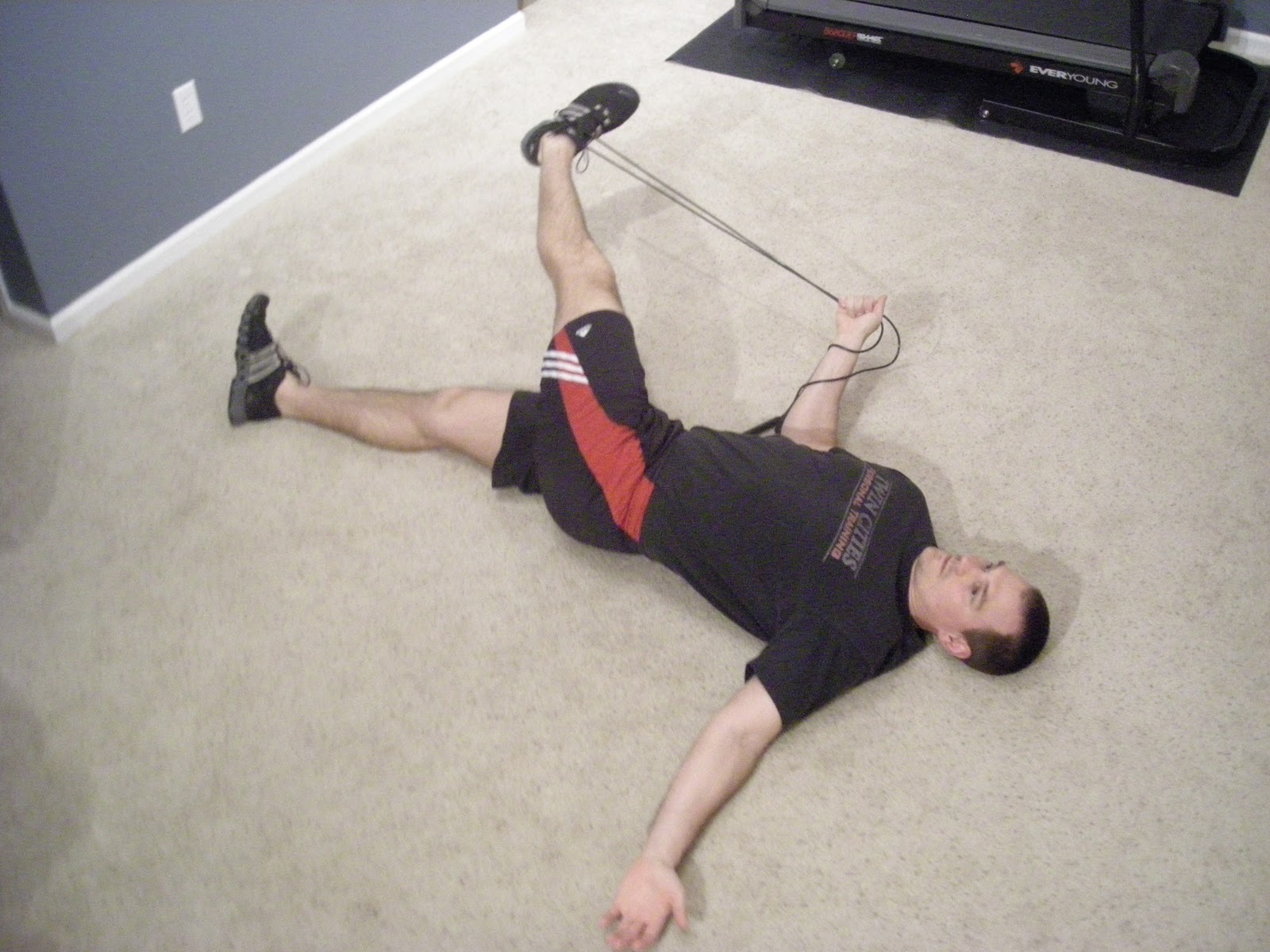
  8. Straight Leg Raises (6x each side)
  9. Hip Cross-overs (6x each side)


Repeat the warm-up circuit (total of 2x)

Metabolic Circuit
After the warm-up, perform the exercises in a circuit, rest as little as possible between exercises.  Remember to take rest if you need it.  The idea of the workout is to complete it as fast as possible (using good form) and try to improve your time each workout.  The suggested reps are listed in parenthesis. Click on the video below for an overview of the exercise for the beginner circuit.   Remember to record your total time (minus the active warm-up) and try to improve on it from workout to workout.  Enjoy.

Beginner Exercises                                                
  1. Push-ups (10x)                                                    
  2. Body Row (10x)                                                                             
  3. Prisoner Squats  (10x)                                                 
  4. Prone Plank Pulses (10x)                                                            
  5. Walking Lunges (10 each side)                                                   
  6. Bike 2 miles (as fast as possible)                                               

Repeat the circuit again (for a total of 2x)             

For an even greater calorie burn and challenge try the Intermediate/ Advanced Circuit.  You must perform 2 circuits of the active warm up first.

Intermediate/ Advanced Exercises  

Click on the video below for an overview of the exercises of the Intermediate/ Advanced circuit.
  1. Spider Push-ups (5 each leg)
  2. Pull-ups (10x)
  3. Squat to Press (10x)
  4. Weighted V-ups (10x)
  5. Prone Plank Pulses (marching 10 ea leg)
  6. Weighted Walking Lunges (10x each leg)
  7. Run 1 mile or bike 3 miles (as fast as possible)
Repeat the Circuit 2 more times (for a total of 3 circuits).  You may want to leave out the last run or bike to keep the total workout time under 45 minutes.

Don't forget to record your times and try to improve from workout to workout.

Happy Holidays!
A. Zamzow

P.S.  You can get a "printable" copy of each workout by CLICKING HERE                                                                                          


Friday, November 30, 2012

Essential Components of a Fire Rescue Workout Program


This blog topic is one near and dear to my heart and your career--Workouts for Fire Rescue Athletes. Over the last couple of months I've been writing about some of the more popular workouts seen in firehouses across the world. You can read about them here and here or listen to a great radio interview about this topic HERE. 

I've received a ton of feedback about those articles both good and bad. One thing I have not done yet is to answer the highly debated question...."What is the best workout for Firefighters, EMTs and Paramedics (Fire Rescue Athletes)?  More importantly what are the components of the best Fire Rescue Athlete Workouts? 

Without further delay, here is my answer (drum roll please)....

There is no single perfect program for fire rescue athletes. We all know we work in very uncertain situations and circumstances so we have to be ready for almost anything and no single workout program can prepare you for that.  There are some common components though that every fire rescue athlete should think about when evaluating a workout program. 

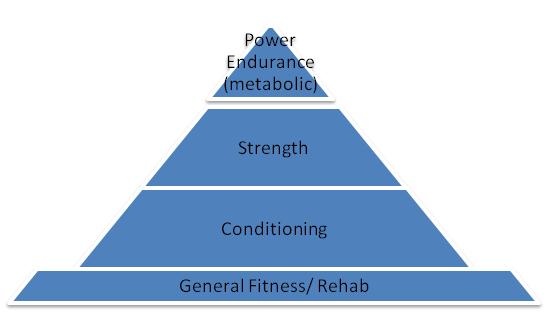
1.   The program must be planned using sound periodization and science. Training should follow a developmental approach or progression. This means there should be a hierarchy of training. First, it is essential for the fire rescue athlete to develop a training base that should increase the body’s functional capacity. Once this is accomplished, the intensity of the exercise is increased to emphasize strength and muscular development. In more general terms, we can also say we develop stability, then strength, and finally power. Regardless of what the training program looks like, it cannot violate this developmental approach. This is one variable that CrossFit does not do, people are getting injured from performing too many presses or pulls or jumps without having a sound base.


2.    The program MUST place a large amount of focus on Core Strength and Balance. During the course of their career, almost 50% of all fire rescue athletes will hurt their back while on duty. Low back pain is the number one reason firefighters retire early. In order for a program to be effective, it must utilize exercises that focus on the developing the glutes, shoulder girdle, hamstrings, hips and abs. Notice that I didn't say anything about a "six pack" of abs. That is one of the cons of P90X; the program is more concerned about beach muscle than core strength.

3.    The program needs to focus on cardiovascular conditioning and recovery.  When you think of cardiovascular conditioning most people think of running or biking, which in most cases emphasizes aerobic conditioning.  Fire Rescue athletes need to have a good level of aerobic fitness but cannot overlook the value of challenging the anaerobic systems.  If you've ever humped a "charged" hose line up some stairs or dragged a victim or axed a roof open you realized the importance of anaerobic fitness.  An effective Fire Rescue fitness program will set a good cardiovascular base then challenge the cardiovascular system with intervals.  Intervals are one of the best ways to simulate the high level of fitness required on the fire ground (click here for a great interval program).  

4.  The program must (at some point) contain full-body functional strength exercises.  Functional strength exercises increase balance around the joints and helps prevent injuries by stimulating stabilizing muscles.  Functional training is in essence is a full-body approach to core training and are effective in athletic injury rehab and prevention.   Functional strength movements like the push-up, goblet squat, lunge, pull-up strengthen all joints of the body in numerous planes.


5.  Programs must include an Active warm-up and flexibility training.  The warm-ups prepare the body for movement, boosts heart rate, blood flow to the muscles, and core temperature.  These movements also improve the function of your nervous system.  Think of this component as taking a few minutes to warm-up a car that has been sitting outside in cold temperatures all night.  The main goal of this the active warm-up and flexibility component is to improve the long-term mobility and flexibility of your muscles.  The more flexible the muscle and joint around the muscle; the better the fire rescue athlete recovers and the less chance of injury.

This is not an all encompassing list but it will definitely give you enough information to help decide if a program has what it takes to be effective for the fire rescue athlete.   Take a look at your current program and see if it contains these components...if not, CLICK HERE to get a FREE Fire Rescue Fitness Workout that does.

Stay tuned for my next post (soon) – Top 10 Exercises for the Fire Rescue Athlete. 


Friday, November 16, 2012

10 Ways to Avoid the Cold and Flu

It’s that time of year again when the common cold and flu begins being passed from one person to the next. Each year the common cold affects the average person two times, and can affect the fire rescue athlete even more.  The sneezing, coughing, sore throat, and runny nose leave you wanting to curl up under the bed covers. To avoid this misery, prevention is the best cure. So with over 200 mutating cold-causing viruses floating around, what’s a fire rescue athlete to do to avoid getting sick? While in our profession it can be hard to dodge every germ, there are proactive ways to boost your immune system and help prevent catching a cold or the flu.  Take a look at these 10 ways:
  1. Wash Hands Frequently.  One of the most effective ways to prevent colds and the flu is simply washing your hands properly and frequently. Wash your hands and encourage those around you to do the same. Most cold viruses are spread through direct contact. Shaking hands and touching doorknobs, keyboards, and telephones are all easy ways to catch germs. Wash hands as often as possible, scrubbing with soap and hot water for at least 20 seconds. Keep hand sanitizer available for when hand washing is not possible.
  2. Wipe Down Germy Areas.  It's common sense not to shake hands or get near a sick person but we as EMTs, Paramedics and Firefighters have no choice.  We all know that we will inevitably be in contact with ill people at some time throughout our shift.    To reduce exposures and spreading germs it’s imperative to properly wipe down equipment and rigs often.  Don’t be afraid to thoroughly wipe down the firehouse as well.   Wipe down germy areas — light switches, doorknobs, the phone, computer keyboard, and your TV remote — with your favorite cleaning product. Minimizing exposure to germs can help prevent colds and the flu.
  3. Drink Plenty of Fluids.  General good health practices keep your body strong and ready to fend off cold germs and the flu virus and this especially includes drinking plenty of water. In fact, one recent study found that staying hydrated may boost a particular immune response to enable your body to better fight the viruses. Stay hydrated by drinking a lot of fluids, especially water, and by avoiding caffeinated drinks. Shoot for six to eight glasses of water per day, more if you consume caffeinated beverages.   
  4. Exercise to Strengthen Your Immunity.  Exercise not only makes you perform your job better as a fire rescue athlete, but it also boosts your immune system.  Additionally, warding off extra weight is important for overall health, particularly when it comes to preventing colds and flu. A recent study found that overweight and obese people were more likely to fall ill or be injured.  Not only does exercise (need a workout, click here) improve the circulation of white blood cells throughout your body, but it has been shown to increase the production of natural killer T cells, which are essential for maintaining an optimum immune response. The amount of exercise required to obtain an immune boost is relatively low, 20 minutes of brisk walking 4-5 times per week has been shown to significantly improve the body’s immune response. This is also a good opportunity to get a little bit of sunshine to stimulate Vitamin D production.
  5. Get Plenty of Sleep.   This can be difficult for the fire rescue athlete especially when the tones go off numerous times throughout the night.  It is important to get as much sleep as possible especially on those days away from the firehouse.  Studies have found that getting enough sleep is essential for healthy immune function and that insufficient sleep or poor sleep quality is associated with lowered immune function. Ultimately you want to get at least 8 hours each night.  There is hope for those of us that can’t sleep through the night, recent research shows that napping can boost health and the immune system.     
  6. Add Some Sunshine.  Researchers are quickly catching on that Vitamin D may be the secret to avoiding the cold and flu. Vitamin D plays an important role in strengthening your defence system to better fight any invading viruses and bacteria. Unfortunately, it is also the number one vitamin deficiency in Americans.  Compounding the problem is the fact that Vitamin D is produced when the body gets adequate levels of sunshine; so naturally, even less is produced in the winter months. It has recently been hypothesized that this could be one major reason for the increase in cold and flu cases during the winter season. Because of this, it’s important that we have other ways of getting this powerful immune boosting vitamin. So here are some solutions.  Spend 15 minutes per day in the sun without any sunscreen on if possible and for those that are in climates that don’t allow you to be outside much then supplement with a Vitamin D3 supplement.  Experts suggest that you consume 2,000 IU per day to fight off the seasonal flu and to make sure your Vitamin D levels in your body are at a therapeutic level.  Of course check with your doctor regarding your individual Vitamin D levels and health plan. 
  7. Put down the sugar.  When it comes to fighting cold and flu, it is essential to decrease your amount of sugar intake. Sugar has devastating effects on the immune system, and the fact that Americans consume an average of 2-3 pounds of sugar per person every year spells bad news come cold and flu season. Not only does sugar increase the production of hormones that suppress the immune system, refined sugar needs micronutrients to be metabolized. This requires your body to use stored vitamins and minerals, further harming your defences. Instead of eating high sugar foods try eating a wide variety of fruits and vegetables.  This will make sure that your body is getting all of the vitamins and minerals that are essential to fighting of the cold and flu. Each and every fruit and vegetable is packed with thousands of phytochemicals. No supplement could ever match the power of eating a whole food. 
  8. Spend time outdoors. Germs thrive in closed areas, so take time each day to step out for a breath of fresh air. In addition, central heating systems dry out the air and subsequently your body, leaving you more susceptible to germs. Running a humidifier in cold months will add moisture back into the air.  Getting outside will also help you get some Vitamin D.
  9. Vitamin C supplementation.  There are a lot of vitamins and minerals that can help boost your immune system but Vitamin C seems to be the typical staple in most people’s “immune booster” arsenal.  Vitamin C is a powerful antioxidant that provides support to your immune system but unfortunately it is often times consumed in the form of orange juice.  An 8 oz glass of orange juice contains just 70mg of Vitamin C, while loaded with 30 grams of sugar (carbs).  As a comparison, 8 oz of Coca-Cola contains just 26 grams of sugar.  In place of orange juice, opt for an actual orange (medium size = 70mg of Vitamin C) or some Vitamin C powder (~1,000 mg of Vitamin C) mixed with filtered water or sparkling mineral water.  These options save a ton of empty calories, reduce sugar consumption yet still sooth your cold symptoms!
  10. Chicken Soup, Mom and a good laugh.  I know that these things aren't backed with research but chicken soup warms the spirit, TLC from Mom is always helpful and laughing can’t hurt (see the quote below). 

“A good laugh and a long sleep are the best cures in the doctor's book.” 
 -Irish Proverb

I hope this list can help you avoid the dreaded flu and cold.  If you need some suggestions on exercise or fitness for the fire rescue athlete click here to get my FREE 28-day Firefighter Workout and Nutrition Guide.

Saturday, November 3, 2012

A Great Fire Station Workout

I get a lot of requests for workouts that can be performed on duty with equipment at the firehouse.  Today my crew and I performed this intensive 30 minute interval workout.  This workout will get your heart racing, challenge your core and work your muscles.

The workout consists of three, 10 minute intervals each with a different focus.  The first 10 minutes focuses on anaerobic recovery, the second ten minutes on full body strength and the last ten minutes on fire ground related movements.

The only equipment needed for the intervals are a 50 feet bundle of  fire hose (2 1/2 inch works best), some stairs if you got them (or a jump rope), a place to do body rows (pull up bar) and an interval timer (there are android phone apps for this).

Interval 1.  Sprints.  This interval requires a little space, you can use the garage bay or parking lot.  Set your interval timer to 30 seconds of work and 30 seconds of rest for 10 rounds (10 minutes total).  Start the timer and walk around the bay or parking lot for the first 30 seconds.  The second 30 seconds you should sprint at 50% pace.  Continue to walk during the first 30 seconds (recovery or rest) of each minute and running (sprints) the second 30 seconds for 10 rounds total.  As each minute progresses your speed and effort level should follow suit.  For example the first sprint should be at 50%, the second 60%, the third 70%, the fourth 80% and so on.  As soon as you finish your last interval immediately reset the timer and proceed to interval #2.

Interval 2. Full body strength.  This interval consists of 3 exercise performed with either 30 or 40 seconds of work (40 for intermediates and 30 seconds for beginners) and 20 or 30 seconds of rest.  You should do each exercise 3 times for a total of 9 minutes, the last minute you should hold a plank.
Here are the exercises:


 **Repeat this circuit 3 times then hold the plank for the final minute.  After you complete the plank rest the times and progress to interval 3.

Interval 3.  Fire ground Movements.  This interval should be performed with the same time parameters as interval 2.  This interval will require you to perform exercises (or movements) that are synonymous with the fire ground.  Here are the exercises"

  • Climbing stairs
  • Floor crawl
  • Hose Drag (grab both couplings of the 50 ft of hose pull, for more of a challenge pull the LDH hose)

 **Repeat this circuit 3 times then hold the plank for the final minute.  After the last interval, grab some water and foam roll.


Thursday, November 1, 2012

Trick or Treat- Why Sugar is Bad


If your firehouse (or house) is anything like the one I work in its full of leftover Halloween candy and sweets. Now I must admit, I like a good treat now and then but often I have a very difficult time stopping with just one.  Why?  Sugar.  Its everywhere in almost everything and too much of it can cause some serious health issues. Some foods, such as fruits and carrots, naturally contain sugar, but watch out for foods with added sugars, such as baked goods, cereals, crackers, even sauces and many other processed foods (many of which are around the firehouse).

A typical American can consume between two to three pounds of sugar every week. As mentioned earlier, sugar is everywhere and is being processed in  many foods we eat. These foods are not just sweets. Sugar in large quantities can be found in peanut butter, mayonnaise, bread, ketchup and many other categorically "non-sweets" products.

Now let's get to the real question: Why is this refined sugar bad for you?

Refined Sugar is bad for you because it raises the insulin level in your blood.  Raised blood insulin levels depress the immune system which decreases your ability to fight disease (not good for anyone that deals with EMS). Raised blood insulin levels can also cause rapid weight gain. Insulin promotes the storage of fat; so, when you eat foods high in refined sugar, you increase fat storage. Obviously, the result is rapid weight gain.

Refined sugar contains no vitamins or minerals so in order for sugar to be metabolized it must draw on the body's reserve of vitamins and minerals. When these reserves are depleted, metabolization of cholesterol and fatty acid is impeded, contributing to higher blood serum triglycerides, cholesterol, promoting obesity due to higher fatty acid storage around organs.

In short high sugar intake has been linked these health issues:

  • Tooth decay
  • Suppressed immune system
  • Anxiety 
  • Depression
  • Rise in triglycerides
  • Reduction in helpful high density cholesterol (HDLs)
  • Promotion of harmful cholesterol (LDLs)
  • Weakened defense against bacterial infection
  • Increase the risk of coronary heart disease
  • Headaches, including migraines
  • and many, many, many more
So now that we know sugar can be bad for us, how do we reduce it in our diets (and around the firehouse)?


Tip #1: Break the Soda Habit

With up to more than 4 tablespoons of sugar in a can of soda, a low sugar diet plan should contain no soda at all. By giving up a single can of soda a week, you can lose a pound a month, without making any other dietary changes.  Substitute seltzer, water or club soda for your sugary, calorie-laden soda. And if you think diet soda is the way to go, read this (click here to see my diet soda post).

Tip #2: Reduce Sugar Cravings
If you eat healthy meals with protein, fiber, whole grains, and complex carbohydrates instead of lots of sugar, you will feel satisfied longer, and eventually reduce your craving for sugar.  The more you eat sugar, the more you crave it.

Tip #3: Read labels
Look for sugar in the ingredients and not just the nutrition facts. Sugar occurs naturally in many foods and is healthy for the body. The goal of reading the label is to make sure sugar is not an added ingredient. If it is not added then do not worry about the natural sugar on the fact list.  As far as how much sugar can you have in a day?  The World Health Organization suggests that no more than 10 percent of your daily calories come from added sugar, so that's a good dietary goal.  By reading labels you can figure out the number of calories you eat each day and how much sugar.

Tip #4: Eat your fruits and vegetables 
Your parents did not tell you "no desserts until you eat your fruits and vegetables" for their health, but yours. While fructose, a natural fruit sugar, is found in your fruits this is okay for you to eat. This is a type of sugar that your body does need and offers your taste palette a sweet treat which is actually healthy.

Tip #5.  Set a goal to reduce sugar
Now that you know how to reduce sugar, make it a reality by setting a weekly goal.  If you are drinking  1 soda a day try to reduce it to one every other day.  If you add sugar to your coffee, try to go without.

The main purpose of this post is to get you thinking about your diet and the foods you put into your body.  We are athletes, in order to do our job efficiently we need to fuel our bodies effectively.

Stay Safe and Healthy,
A. Zamzow
www.FireRescueFitness.com